Engineer, Photographer, Cook and a Foodie.
I try out different ideas and concepts of photography and regularly sort out questions on Quora.
Check my Facebook Page below! Share it, like it...show me some love!!
Welcome to the blog :)
Today, we explore the cars that ignited a passion for automobiles in millennial India. Buckle up for a dose of nostalgia as we revisit legendary rides and the cultural impact of movies like The Fast and the Furious and video games like Need for Speed.
For many Indian kids growing up in the 90s, the world of high-performance cars was first glimpsed through the exhilarating races of Need for Speed. These games introduced us to the roaring American muscle cars and the meticulously tuned Japanese imports, igniting a fascination with speed and customization.
The year 2001 marked a turning point. The Fast and the Furious exploded onto the scene, bringing these dream machines to life. Who can forget the iconic final race between Dom’s Dodge Charger and Brian’s Toyota Supra – a scene forever etched in the minds of car enthusiasts in India.
Tokyo Drift continued the legacy, showcasing the art of drifting with the iconic Mitsubishi Lancer Evolution. Need for Speed games like Underground 2, Most Wanted, and Carbon further fueled our passion with extensive customization options, allowing us to virtually build our dream cars (NFS Underground 2, Most Wanted, and Carbon were personal favourites!).
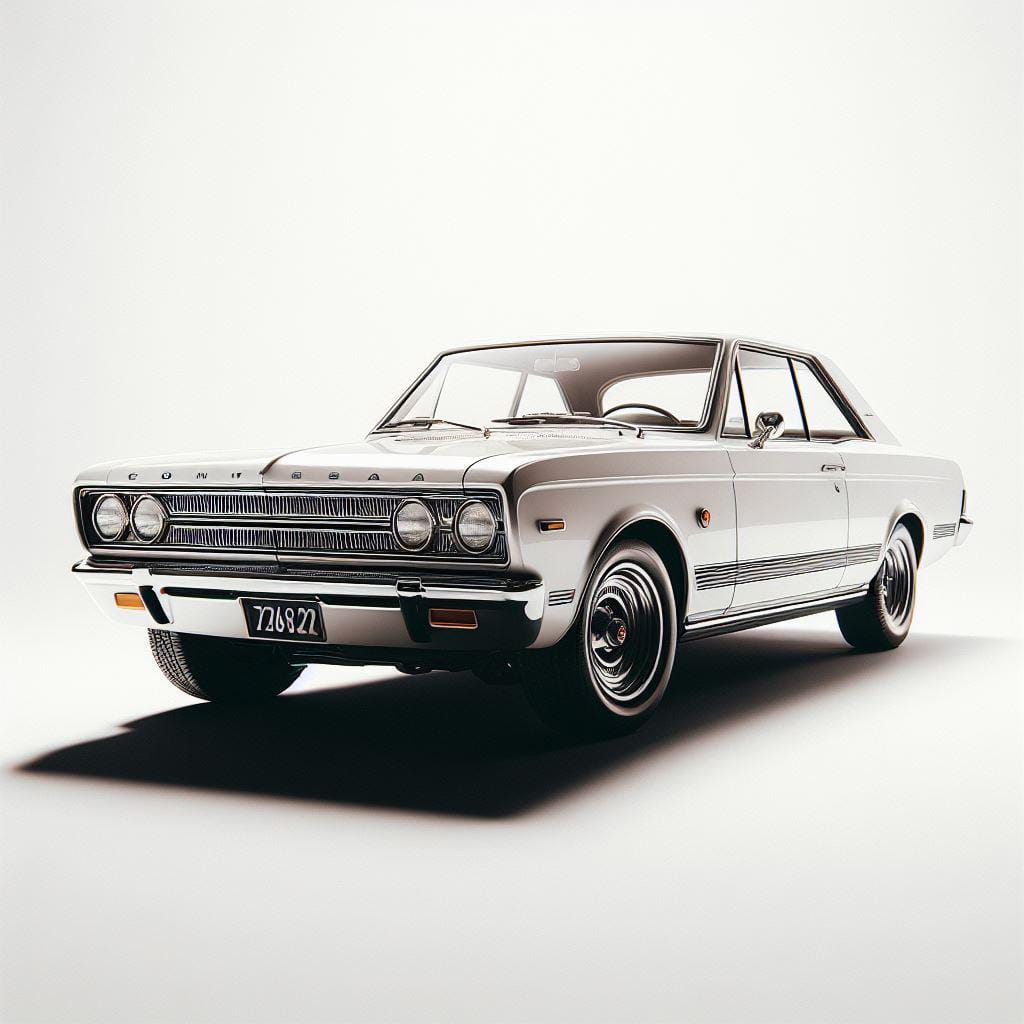
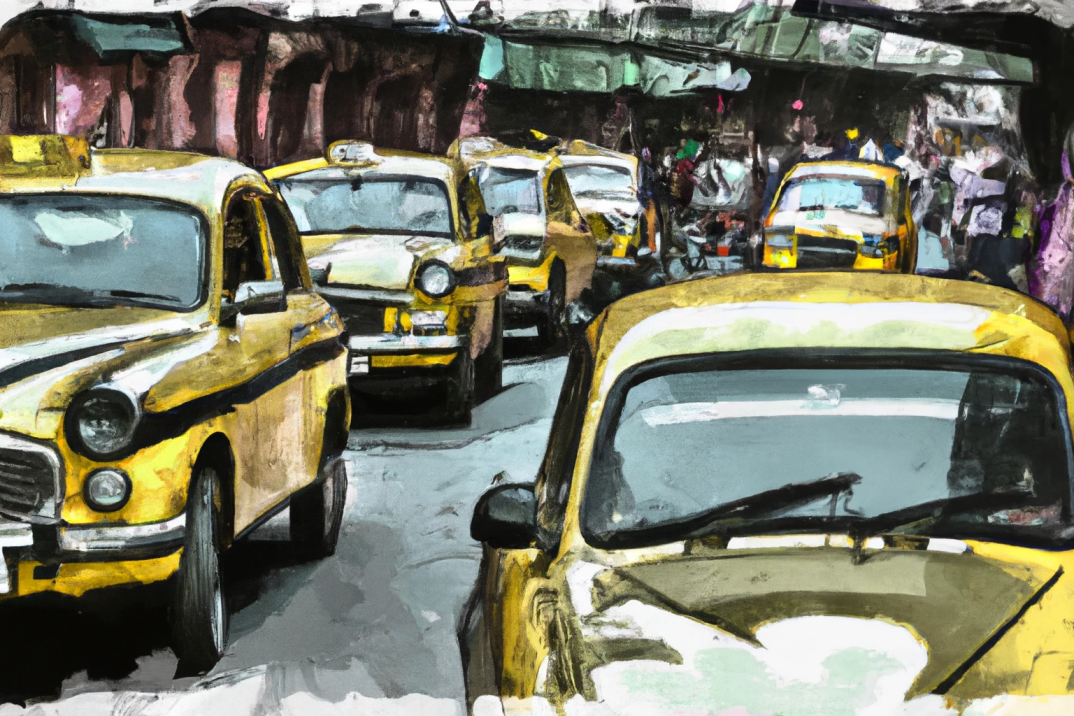
The high cost of American muscle cars and Japanese tuners meant they remained largely out of reach for most Indians. However, that didn’t dampen our automotive spirit. Hindustan Motors, known for the ubiquitous Ambassador, offered a taste of muscle with the Contessa. Though lacking the raw power of its American counterparts, the Contessa boasted a stylish design and premium comfort, becoming an aspirational symbol for many.
On the other hand, the Lancer Evolution represented the tuner dream. This high-performance sedan, with its lightning-fast speed, sharp handling, and aggressive looks, garnered a cult following in India. The later Evolution X, though available, came with a hefty price tag, solidifying its status as an ultimate aspiration.
From the virtual world of Need for Speed to the celluloid spectacle of The Fast and the Furious, these cars left an indelible mark on Indian car culture. Even though the likes of Contessa and Lancer Evolution remained out of reach for many, they ignited a passion for automobiles and the thrill of the open road – a feeling that continues to resonate today.
So, today, we pay homage to these two cars which we would see rolling in the streets once in a blue moon and would feel honoured that we saw it. We would talk about the sighting at schools and the friends who did not get to see the cars would feel envious. Our way of paying homage comes in the form of inspired designs printed on white, cotton T-shirts, available at The Inky Figment store.
Feel free to browse and check out the merchandise. We hope you find something you like and buy it or just gift it, or just spread the word around 😊
The car we drive tells people a lot about the kind of people we are, and the car we drive depends a lot on the ones we have seen and wanted while growing up. In this upcoming series, we revisit the cars that have left an indelible mark in the memories of the 90s-born populace in India.
For the first post of the series, we begin with the absolutely legendary, one of the OG off-roaders, the Land Rover Defender.
For a child growing up in 90s India, it wasn’t just a car, it was an embodiment of adventure. This boxy behemoth rumbled past on dusty roads, leaving behind a trail of red earth and pure, unadulterated envy.
Land Rover’s Defender has a history as long and illustrious as the Himalayas it was built to conquer. Debuting in 1948, it was the quintessential utilitarian vehicle – a workhorse for farmers, a loyal companion for explorers, and the pride of many paramilitary forces across the globe.
Remember those grainy wildlife documentaries narrated by David Attenborough? The one where the camera pans across the savannah, following a pride of lions, and there, in the distance, is a speck of khaki – a Land Rover, patiently keeping pace with nature’s drama. That, my friends, was the Defender in its element.
This legend wasn’t built on horsepower (though it had plenty), but on capability. The Defender could wade through rivers, clamber over rocks, and traverse seemingly impossible terrain. It was a symbol of resilience, a testament to British (and later, Indian) engineering prowess.
Even amidst the throng of hatchbacks and sedans, the Defender stood out. It was a reminder of the wild places beyond the asphalt jungle, a call to explore the unbeaten path.
So, the next time you see a Land Rover Defender, take a moment to appreciate this icon. And if you’re feeling particularly nostalgic, well, we’ve got a whole range of t-shirts that capture the rugged spirit of the Defender. Head over to our Land Rover Defender-inspired collection at The Inky Figment, and who knows, you might just find the perfect way to relive your childhood adventures!
We will return soon with another car and inspired designs that have helped shape our childhood and still influence us today.
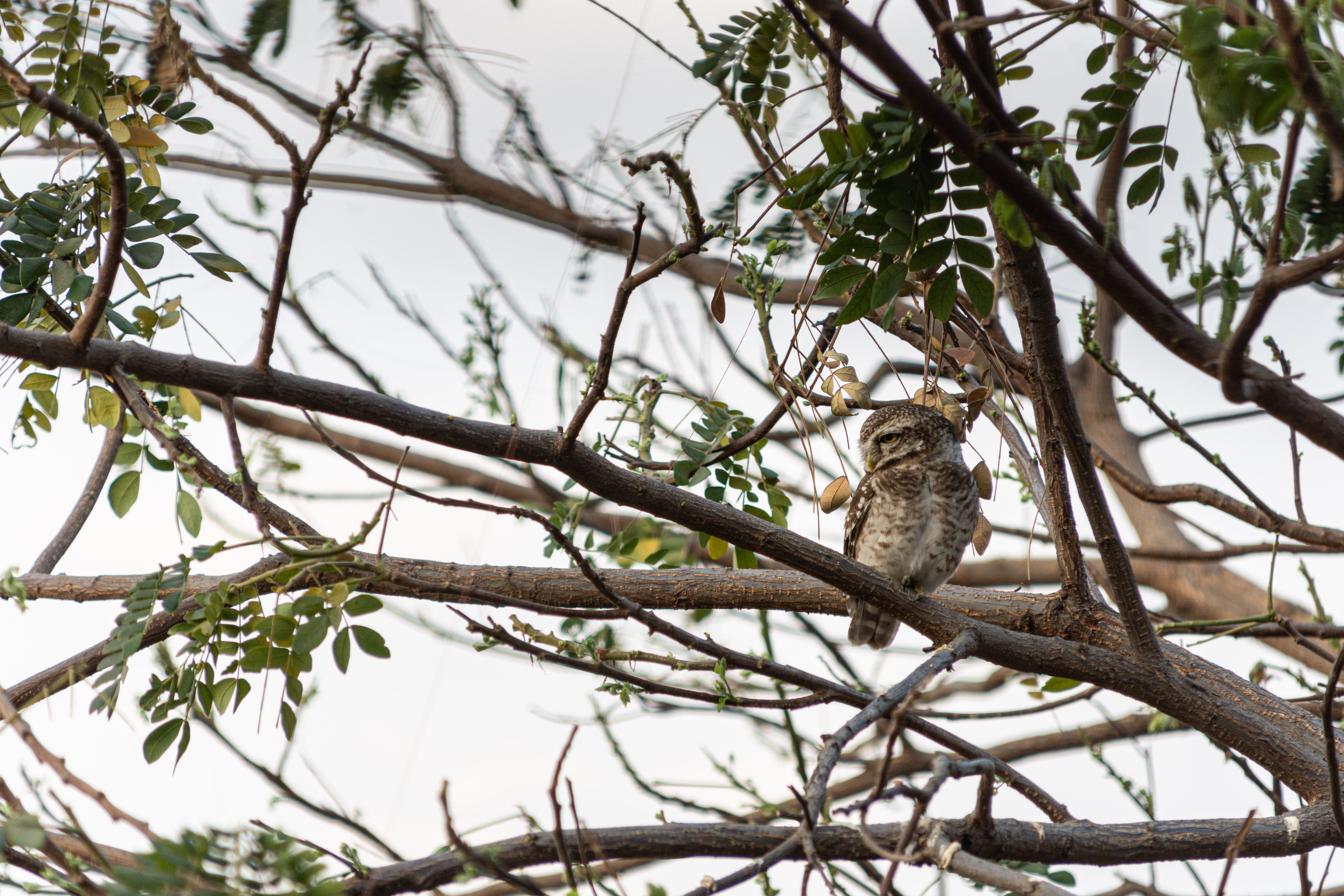
Spotted owlets (Athene brama) are captivating birds of prey that have adapted quite well to urban environments. Their general appearance includes a distinct round head with white eyebrows and spotted plumage on the upperparts, accompanied by a whitish belly. They are small in size, measuring around 8 inches in length, and display striking yellow eyes.
These owlets are nocturnal, meaning they are most active during the night. Despite their diminutive size, they display fearless behavior, often perching prominently and hunting openly even in well-lit urban areas. Their diet primarily consists of insects such as beetles, moths, grasshoppers, and occasionally small rodents or reptiles.
In terms of nesting habits, spotted owlets are known for their adaptability. They readily make use of man-made structures like buildings, old trees, or nest boxes to create their homes. Their nests are often located in the cavities of these structures and can be easily accessed.
One particularly intriguing behavior of the spotted owlet is its social nature. They form monogamous pairs and are frequently found in colonies. The communal roosting and nesting habits of these owls are uncommon among raptors and add to their distinctive characteristics. Additionally, they are known to exhibit a wide range of vocalizations, including hissing, chattering, and various calls, making them quite vocal for their size.
Overall, the adaptation of spotted owlets to urban habitats, their social behaviors, and their hunting techniques make them unique and captivating urban-dwelling owls.
Since the last few weeks, I have noticed a small family of these magnificent birds on a tree within acceptable camera range. The fluffy birds with curious yellow eyes and their antics, be it dozing off slightly in the summer evenings or preening themselves or hopping about, branch to branch, form for quite a bit of light entertainment as well. While post-processing these images, I asked Leonardo what it thought would images of spotted owlets in steampunk gear look like and the following was the best response. Pretty much on point, I would say!
While these birds are fairly common, they do enjoy their privacies and are hence not widely seen by a lot of people during the day; I feel quite elated to spot them nearby and in a way maybe this owl family has come to recognize me as well. If there is progress in this relationship, there shall be more posts on the same for sure.
The camera used is a Nikon D7200 coupled with a Tamron 18-140mm lens.
When was the last time you spotted an unusual bird in your locality? Tell us all in the comments below.
Art has always been a dance between human imagination and the limitations of our tools. But what if those limitations could be swept away, replaced by a digital brush wielded by the power of artificial intelligence? Enter the world of AI-powered content creation and art, where the canvas becomes a living playground and your creativity knows no bounds.
My recent foray into this realm has left me breathless. Imagine crafting text prompts that blossom into breathtaking images, each stroke on an AI live canvas breathing life into pixels, evolving the artwork in real-time. The ability to experiment with diverse styles, from hyperrealism to abstract whimsy, is a creative playground like no other. This is just the tip of the iceberg; the possibilities for AI in art are as vast as the human imagination itself.
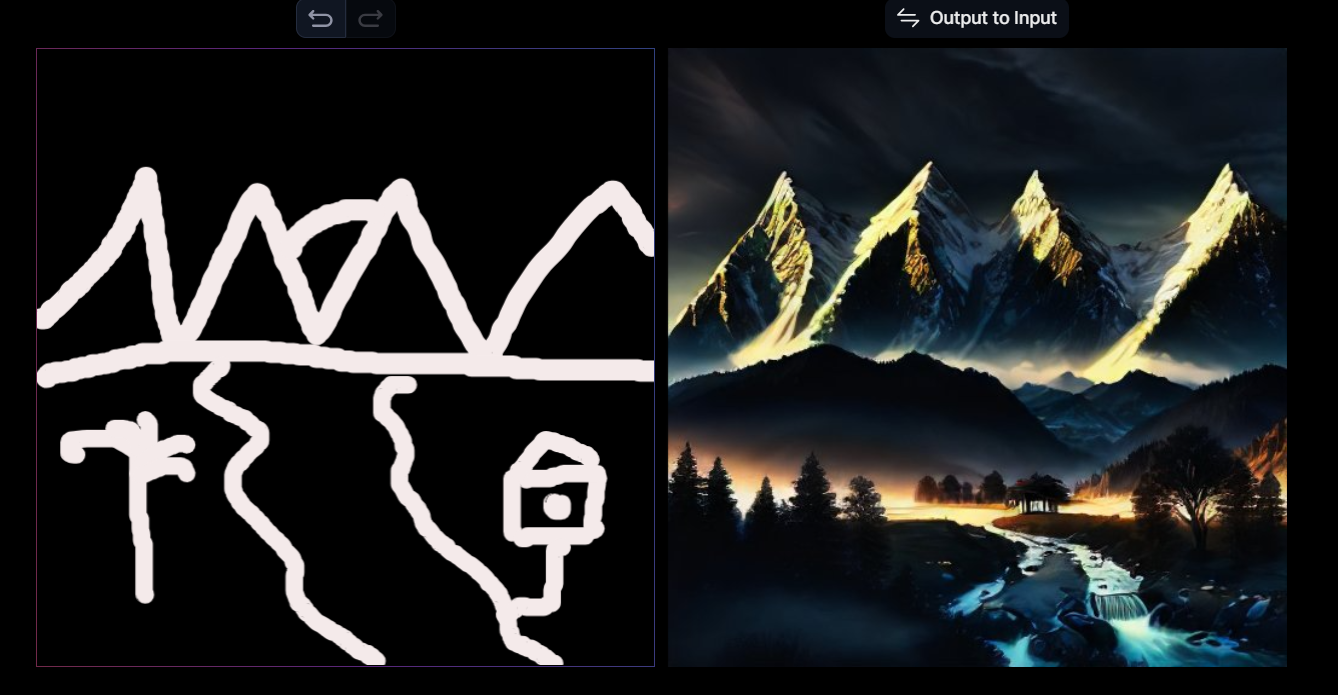
What you see above are just two of the many variations that I created out of a simple sketch and then tweaking various parameters. But this isn’t just about convenience or spectacle. AI can be a powerful collaborator, pushing creative boundaries and sparking new ideas. Imagine a world where an artist’s brushstrokes are amplified by AI algorithms, suggesting unexpected color palettes or surprising forms. This isn’t about replacing the artist, but rather about creating a symbiotic relationship where humans and machines co-create, pushing the boundaries of what art can be.
Of course, this new frontier comes with its own set of questions. How do we ensure AI art remains authentic and meaningful? How do we prevent the homogenization of creative expression? These are critical issues that require careful consideration and open dialogue.
Yet, the potential of AI in art is undeniable. It’s a democratizing force, making artistic tools accessible to anyone with a spark of imagination. It’s a catalyst for innovation, pushing the boundaries of our visual language. And it’s a reminder that the human spirit of creativity will always find a way to express itself, even in the face of the most advanced technology.
Before we part, it is important and imperative to show you, just how much amazing AI is. The photo below is a screenshot from the AI website that has been respobsible for creating these amazing images.
So, the next time you feel the urge to create, don’t be afraid to explore the world of AI. Grab your virtual brush, let your imagination flow, and see where the pixels take you. The future of art is being painted right now, and you, my friend, are an artist in this digital renaissance.
I would love to hear about your forays into the land of AI Art in the comments below! Let’s spark a conversation about the future of creativity.
With the end of the collaboration between Intermiles and ICICI bank, the Visa-powered Intermiles card from ICICI has now been discontinued. So, my search for a travel-centric credit card began once more.
This time, my needs were simple. The card should provide reasonable returns in the form of points or cashback, provide lounge access, and have a low forex markup charge. Having a low joining and annual charge was a good feature on top. During the search, it became clear that most of the cards have been devalued and lounge access has become a rarity for the cards that are not in the Premium or Super Premium range.
Since I was not willing to spend a lot on the charges, the search continued, until I found the Scapia card.
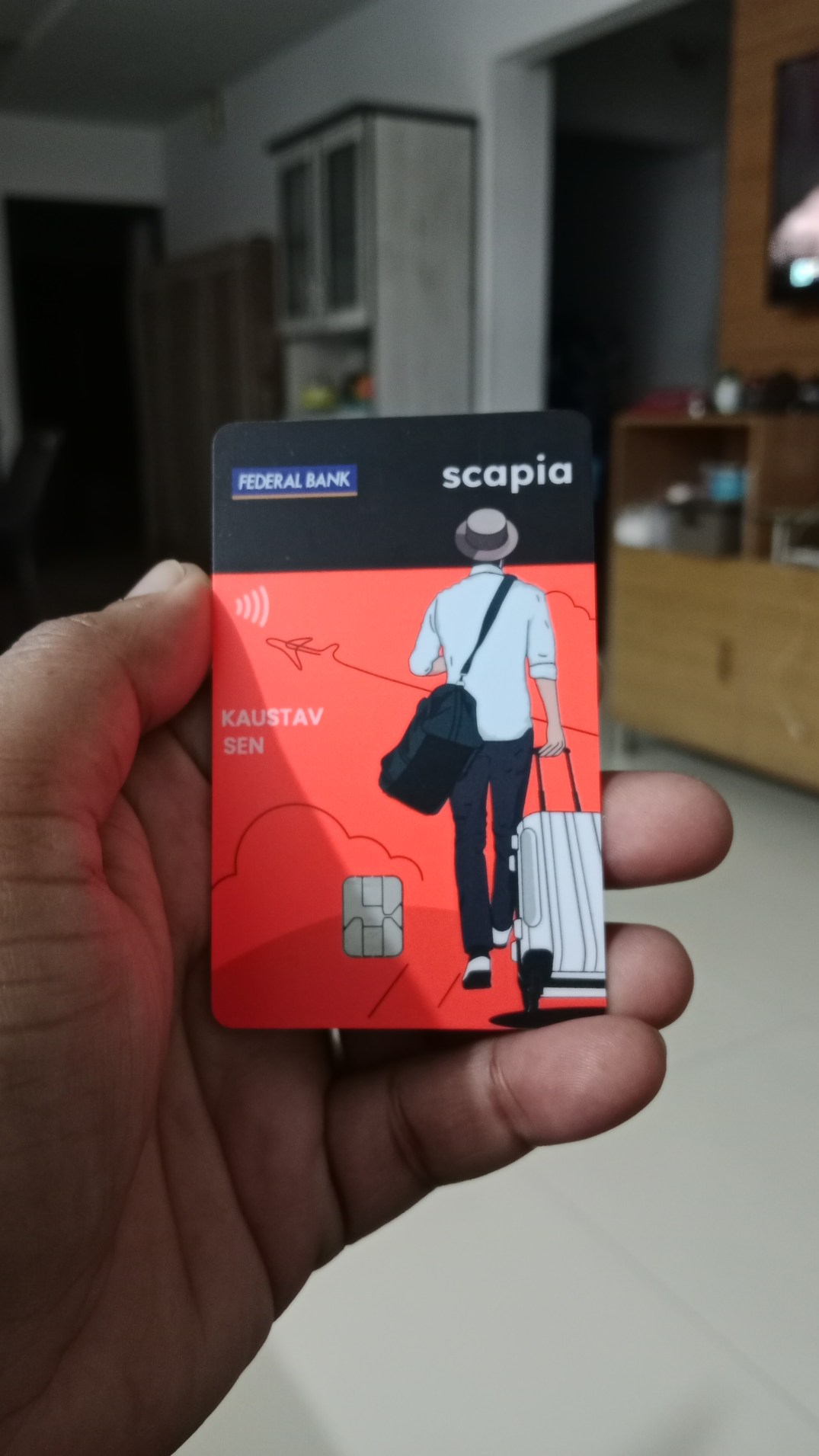
This card has zero joining fees and zero annual charges, issued by Federal Bank. It is available on the Visa platform. Along with it being an LTF (lifetime free) card, the USP is that it has ZERO FOREX MARKUP charge. So, when making payments in a foreign currency, we do not incur any markup. You pay the conversion amount, that’s all.
Rewards are in the form of Scapia coins. For every transaction that is not on travel, we get 10% Scapia coins and for travel-related transactions, it is 20%. Forex payments do not provide any points though. And the points accumulated can be redeemed only on their app which is completely travel and hotel booking centric. The app has options of flight and hotel booking and the rates are quite competitive. A thing to note is that this card offers unlimited lounge access but with a condition. The condition is that there must be spends of at least ₹5000 in the previous month. Considering that this card can be used like a regular card and the options it provides are not atrocious, spending at least ₹5000 in a month and gaining the option of unlimited lounge access across India is quite nice.
The application process for the card is a simple and straightforward one. You download the app on your phone, fill in the details, accept the terms and conditions after reading them carefully, take a selfie, and done. Your virtual card becomes ready for use immediately and can be used for online payments. The physical card arrives a few days later in a funky box. There is a booklet with the most important terms and conditions (MITC), some stickers, and the card itself. Neat packaging I must say.
In the app, they have a gamified target spend roster known as Scapia Heist where based on the amount and number of spends you get badges and they lead up to more points. It’s a nice touch in the app. Various deals in Dining, Travel, Fashion, Health and Wellness, etc. are applicable to the card and accessible through the app.
A group of customers who would enjoy having this card is the bloggers and other content creators who may be active on international platforms such as WordPress where the payment is in USD. For people like these, this card would save quite a bit of money and might serve as quite an attractive proposition as well.
Overall, I feel this card is a good card to have especially if you travel quite a bit and are looking for a zero forex markup card, without breaking into the premium and super premium segment. Give this card a shot, it would be worth the effort.
Capturing vibrant and true-to-life colours is essential in photography. One crucial aspect that contributes to colour accuracy is white balance. Understanding and effectively controlling white balance can transform your images from dull to stunning. In this blog post, we’ll demystify the concept of white balance, explain its importance, and provide practical tips to help you achieve accurate colour representation in your photographs.
What is White Balance? White balance refers to the adjustment of colours in a photograph to ensure that white appears neutral and that other colours are accurately represented. It is a vital setting that balances the temperature of the light source with the camera’s sensor, resulting in natural-looking colours. Different light sources emit varying colour temperatures, such as warm orange tones in incandescent lighting or cool blue hues in daylight. Understanding white balance allows photographers to correct these colour shifts and achieve accurate and pleasing colour renditions.
Importance of White Balance Accurate white balance enhances the overall mood and impact of your photographs. It ensures that the colours you capture reflect the scene as you witnessed it, creating a sense of realism and authenticity. Proper white balance eliminates unwanted colour casts, such as the bluish tint in shaded areas or the yellowish cast in indoor lighting, providing a more pleasing viewing experience. Whether you’re shooting portraits, landscapes, or still life, mastering white balance empowers you to convey the intended emotions and atmosphere effectively.
White Balance Settings Modern cameras offer various white balance settings, including Auto, Daylight, Cloudy, Shade, Tungsten, Fluorescent, and Custom. Auto white balance (AWB) is convenient but not always accurate, especially in challenging lighting conditions. Experimenting with different presets or manually adjusting the white balance can yield better results. Custom white balance allows you to calibrate it based on the specific lighting conditions, ensuring precise colour accuracy. Additionally, shooting in RAW format enables greater flexibility in post-processing, allowing white balance adjustments without sacrificing image quality.
Practical Tips for Accurate White Balance a. Use a grey card or a white reference object to set a custom white balance accurately. b. Utilize the Kelvin temperature scale to fine-tune white balance manually. c. Pay attention to the colour of light sources and adjust accordingly (e.g., warm indoor lighting or cool shade). d. Shoot in RAW format to have greater flexibility during post-processing. e. Experiment with creative white balance adjustments to enhance the mood or convey a specific atmosphere.
White balance WarmCorrect White BalanceWhite balance Cool
Mastering white balance is a skill that can elevate your photography and breathe life into your images. By understanding the concept, adjusting settings, and employing practical techniques, you’ll achieve accurate and captivating colours in your photographs. To put it simply, white balance ensures that the whites in nature appear as white in the photo as well. Embrace the power of white balance to accurately represent scenes, evoke emotions, and tell your visual stories with impact.
The following article aims to understand how much it costs to begin investing in the US Stocks market, from the perspective of a general salaried individual. The assumptions here are that the reader understands the stock market and is interested to invest in the US market. Also, the investor understands that there are tax implications, exchange rate fluctuations and is savvy enough to test the waters on their own.
Investing in the US Stock market has always been quite lucrative for the retail investors of India thanks to the options of fractional buying and the advantage of the higher exchange rate of the US Dollar against the Indian Rupee. An investor who might have invested $200 worth of US Stocks at about ₹50/$, assuming zero share price movement, would have a portfolio appreciation of about 64% in the current times without having to do anything at all, simply because Rupees depreciated and became ₹82/$ i.e an investment of ₹10000 becomes ₹16400. Fractional buying, as mentioned earlier, is also an interesting thing. In the Indian stock market, you cannot buy ₹500 worth of MRF’s stock because here the minimum number of stocks has to be an integer, meaning, a minimum of 1. So, your minimum investment in MRF has to be ₹88320 (as of 14-Feb-23). This is an entry barrier for a lot of retail investors. On the other hand, you can buy ₹500 equivalent of Tesla stocks and begin your US stock investing. The easiest way to get benefits of the US market in providing some risk coverage to your domestic portfolio is by investing via mutual funds which also have US funds. It is simple and hassle-free. It functions just like the normal funds, just that they invest in a US fund, generally owned by the same company.
But, if you want to take charge and invest personally, there are a few available options. The traditional way exists by opening an account with international brokers and then proceeding as usual. Brokerages are generally high and there might be a few restrictions in place. The alternative is to use the apps such as INDMoney, Groww, Vested etc. These apps tie up with banks and use their DEMAT accounts for investing, or with US brokers who open an account on your behalf and the investment begins. One of the biggest marketing flex that these apps have is that they are zero commission platforms. That means, the apps do not charge you brokerage for the trades. While this is lucrative, charges exist for the withdrawal of your fund within certain limits. So, what is the minimum cost incurred to begin investing? Let’s take two examples and try to find out. We shall be considering Vested and INDMoney.
Vested has zero sign-up charges, but it needs for you to have a DEMAT account with Axis securities. That costs ₹499 initially and then at least ₹750 per year, then on. Beyond this, money has to be transferred from your bank to the US broker’s account. Each transaction costs a minimum of ₹1000 in transaction charges, ₹500 in SWIFT charges and 18% GST. So, for the 1st transaction, it will cost about ₹2000. This is without considering the bank’s exchange rate.
INDMoney, on the other hand, creates its own DEMAT account using KYC documents and then all you have to do is fund your US account. There too the charges are similar, except for the initial ₹499 as account opening fees. Here too, you are at the mercy of the bank’s rates to be able to transfer money from India to the US.
In my limited search, I found HDFC bank to have the least transaction charges. Beyond this, most of the banks range in around ₹1200-₹1600 per transaction. Something that is to be taken into account is that a big portion of the transaction fee is a fixed charge. So, whether you remit ₹5000 or ₹50000, the transaction fees would be very similar, with only the tax part changing. So, it is smarter to move a chunk of money and then invest from the chunk over a period of time, rather than affecting multiple smaller transactions.
In the latest budget proposal, there is a clause suggesting the implementation of a 20% TDS on foreign remittances, irrespective of a threshold. This TDS would be deductible against the income tax of the individual, but it is still a bit of “stuck” money. So, if you are planning to invest in US Stocks, the time seems quite ripe for the same.
In case you consider INDMoney, you may use the following referral code: KAU734U3IND I hope I have been able to shed some light on the costs involved in beginning your US Stock Investing journey. Happy investing.
On the 1st of February, 2023, Ms N. Sitharaman, the finance minister of India, delivered the last full budget before the term of the current govt. ends and general elections occur, expectedly, in May 2024. There were many expectations out of the budget from various groups of people and institutions, some have been met, some exceeded, while some have fallen short as well.
This post is not for the analysis of the entire budget, but rather of a very particular section, that affects salaried countrymen like myself, the Personal Income Tax.
With the proposal for the new tax regime for 2023-24 (hereafter mentioned as the new regime), discussions have come aplenty as to how much tax would be saved and how it shall spurt the growth of the economy and so on. It is beyond doubt that the disposable income at the hands of the salaried employee will increase, let’s take an example below.
For an employee, earning a gross income of ₹12,00,000, the income tax, as per the new regime comes to be ₹85800. For the same employee, under the old tax regime, considering the standard deduction of ₹50000, professional tax of ₹2400 and assuming HRA exemption of 15% of gross, the taxable amount becomes ₹967600, which attracts a tax of ₹110261. A difference of ₹24461, is definitely not a small amount. One must note that here we are considering that there are no tax-saving investments made. No 80C, no 80D, nothing. We can summarize that by following the old regime, the employee would have a monthly income of ₹71445, whereas the new regime would provide ₹92850, a clear ₹21000+ difference. At a glance, this is quite amazing. Higher disposable income will invariably translate into higher consumption, which in turn will lead to better economic scenarios.
On the flip side, we must note that most of the exemptions that the old tax regime offers are tied to a certain security for the future. The sections 80C, 80CCD, etc. are aimed towards savings for the future, in the form of PPF, ELSS schemes, Sukanya Samriddhi schemes or NPS. So, for people who are still not too concerned about future plans, even for the sake of avoiding tax, there are avenues for savings. In the new regime, there is no such obligation. Rather now, one must be careful as to not spend all the money away on luxuries, rather than saving for future security. The fact that just because there are no exemptions anymore, does not mean that the need for insurance schemes shall vanish. Worse still, now one has to buy the schemes, as usual, but not be able to claim any tax rebate, if following the new regime.
Reimagining the above example, but this time, we consider that along with the deductions considered earlier, there is also ₹250000 worth of savings done in the form of 80C, 80CCD (NPS) and 80D schemes. The resultant taxable income becomes ₹717600. Calculating the tax on this, as per the old tax regime, we obtain a payable tax of ₹58261. Calculating further, we obtain a monthly disposable income of ₹59311. While this is about ₹12100 less than the disposable income obtained if no savings are done, savings towards future security is being done. The point to note is that the new regime shall provide an increase of ₹33500 per month as disposable income. For an entrepreneurial person, it is an outright boon and it opens up growth opportunities.
Concluding the above views, we realize that the new regime will put more money in the hands of the individual, provide greater control and above all, entrust a lot of responsibility. As a follow-up to the budget, there should be more widespread awareness sessions about the various investment schemes, so that the people who opt for the new regime can utilize the money fruitfully.
This move, by Ms Sitharaman, might very well prove to be a turning point in the history of the country where the increase in the involvement of the salaried class in the investment market is remarkable or it may be the beginning of a downward spiral where unnecessary spending takes precedence over future planning leading to eventual misery and woe.
To end, I realise that people who understand their money matters properly, can control their finances well and believe that they can take care of the situation on their own, they must choose the new regime. The ones who are not too sure about their capabilities and would like to play it safe should invest as much as they can and take advantage of the old scheme. Finally, in my opinion, no one should opt for the old scheme if not keen on investing in any of the tax saving instruments currently.
The excel sheet used to make the calculations and come to the results is linked here. Please feel free to use it to compare your own tax liability. I am not a “Tax Expert” but I do fill my own ITR, am sure that counts 😊 The cover image has been sourced from Shutterstock via Google. I do not own any right to the photo.
I will be thrilled to read your thoughts on the report and am sure, I shall learn from your perspectives as well. Cheers!
The basic definition of Art is that it is a means of expression by intelligent beings. The means of expression can be singing, dancing, drama, literature, music; the list is endless. Since the time when the first human could express their surroundings, they have done so. In the form of cave paintings and sculptures, and one can agree that when we mention art, the first thing that comes to our mind is either a sketch or a painting.
Up until very recently, the ability to create art was natural. I will elaborate. Natural, in the sense that it had to be an intelligent being who was creating the art in the form of painting, sculptures, songs, etc or it would occur spontaneously in nature, such as the geometric shapes we see in the snowflakes or in hail, the patterns formed by flower petals etc. But now, since the last few years, there exists a means to create art, quite literally using plain text words. I am referring to the use of AI to create art. Now, we can type in a few words to describe our imagination and Voila! we have our artwork ready.
Let me show you some examples!
These images you see here, I can claim to be the brains behind the prompt that produced them, but the creator’s credit goes to the AI.
The way this works, on the front end at least, is as the following. We conceptualize what we want, the weirdest, wildest ideas, in the most vivid detail. Write it down on the available prompt of the software/app/webpage. Hit the create button and choose the output from the list of generated images. Of course, behind the scenes there exist many algorithms to decipher the text and their understanding, then generate the images which fit the prompt. One can also describe the type of output expected, such as photorealistic, oil painting, pencil sketches, etc. And, it can be as weird as your imagination as well.
Better still, these AI-generated images can be made copies of and sold as framed paintings, printed on T-shirts, even as NFT. So, all you need now, to become a celebrated artist, is to have a vivid sense of imagination, a powerful AI tool and some time to spare.
These images have been created by me using the website Craiyon and via DALL-E. Do check them out and post your masterpieces.
I was born in 1991 and neither of my parents, during their years of career has had a credit card. So, at the first opportunity, 26 years later, I promptly obtained one. For a lot of people in the middle class, my generation is the first one which takes the plunge into the world of rewards, cashbacks, due dates and balance transfers. Almost every bank we know of, issues a credit card and each has its own pros and cons.
Amongst the cards available to be issued based on applications, AMEX cards are one of the most desirable ones. So, yet again, upon realizing that I was eligible for one and would be able to use it fruitfully, I applied and obtained one. The prime objective was to experience the enigma around AMEX cards, the rewards programmes and to be honest, the slight feeling of pride from the second glance the card receives as you hand it out to be used.
In the post ahead, I shall discuss some of the basic questions that I had asked around and hope that it’ll help you too. The discussion aims to cover
Types of cards – Debit/Credit/Charge
How AMEX is different?
Eligibility and why you should get one
The rewards programme
Pros and Cons as experienced by me
How to get an AMEX card with no annual fee
Let’s begin!
Types of Cards – Debit/Credit/Charge
These three are the major types of cards available easily to any customer.
The Debit card is linked directly to your bank account. There are daily transaction limits on the card and you can, technically, spend as much as your balance is in the linked account. In India, for most debit cards, a daily transaction limit of ₹50,000 exists. Debit cards are given out as a part of the standard kit while you open a new account in the banks. These are generally free of charge or a minimum yearly charge for account maintenance is charged.
The Credit Card (CC) is not linked directly to your bank account, in a manner that what you spend on the credit card will not dent your bank balance immediately. Every CC comes with a limit of sorts, which is the maximum expense that you can incur on that card. There is a fixed number of days in which you must repay the CC account, which varies from 30 to 51 days in general, which is known as a credit cycle. The limit of the card is dependent on your income, spending habits, CIBIL scores; simply put how reliable you are that you shall pay the money back, from the bank’s point of view. This causes the limit to vary wildly. For me, I have had cards where the limit varied from ₹18,000 to ₹2,50,000, and the limits keep on changing over time. Also, in case you are unable to pay your dues on the due date, there is an interest that is charged for every day that you delay settling the due. These cards can have loads of rewards attached to spending goals and may have annual charges for them.
What about the needs of high spend groups? Having a limit on their spending is not suitable for them, so there comes the third kind, Charge Cards. These cards are meant mostly for people who require virtually unlimited spending power while being able to repay on a fixed date. Charge cards mostly include an uncapped spending limit, loads of reward points and an annual fee. The prime point for a charge card is that you must pay the due on the day of the statement. There is no free credit period as such for these cards. So, these cards are best suited for business purposes, where transactions are settled on a fixed date basis. In case there is a fee default, it gets reported to the credit bureaus and has major negative effects on the cardholder’s credit ratings and in turn to his/her credibility in the eyes of the bank. So, if you are sorted with your finances, have the requisite control needed and do not mind paying the annual fees, the rewards of a charge card can be very alluring indeed.
Some of the debit cards I own!
How is AMEX different?
The biggest difference is that AMerican EXpress (AMEX) is not a bank. It is a credit card issuing agency that issues its own cards and has tie-ups with most major banks of the world. So, you can not have debit cards from AMEX, though you might have AMEX affiliated ones, similar to the VISA or MasterCard or RuPay ones that we see commonly. There are prepaid AMEX cards too. So, what difference does it make for you and me? The answer is, to obtain an AMEX card, you’ll have to either apply for it or be invited to its membership. Of course, most major banks of the country have credit cards that are AMEX affiliated, but they are still not technically AMEX cards.
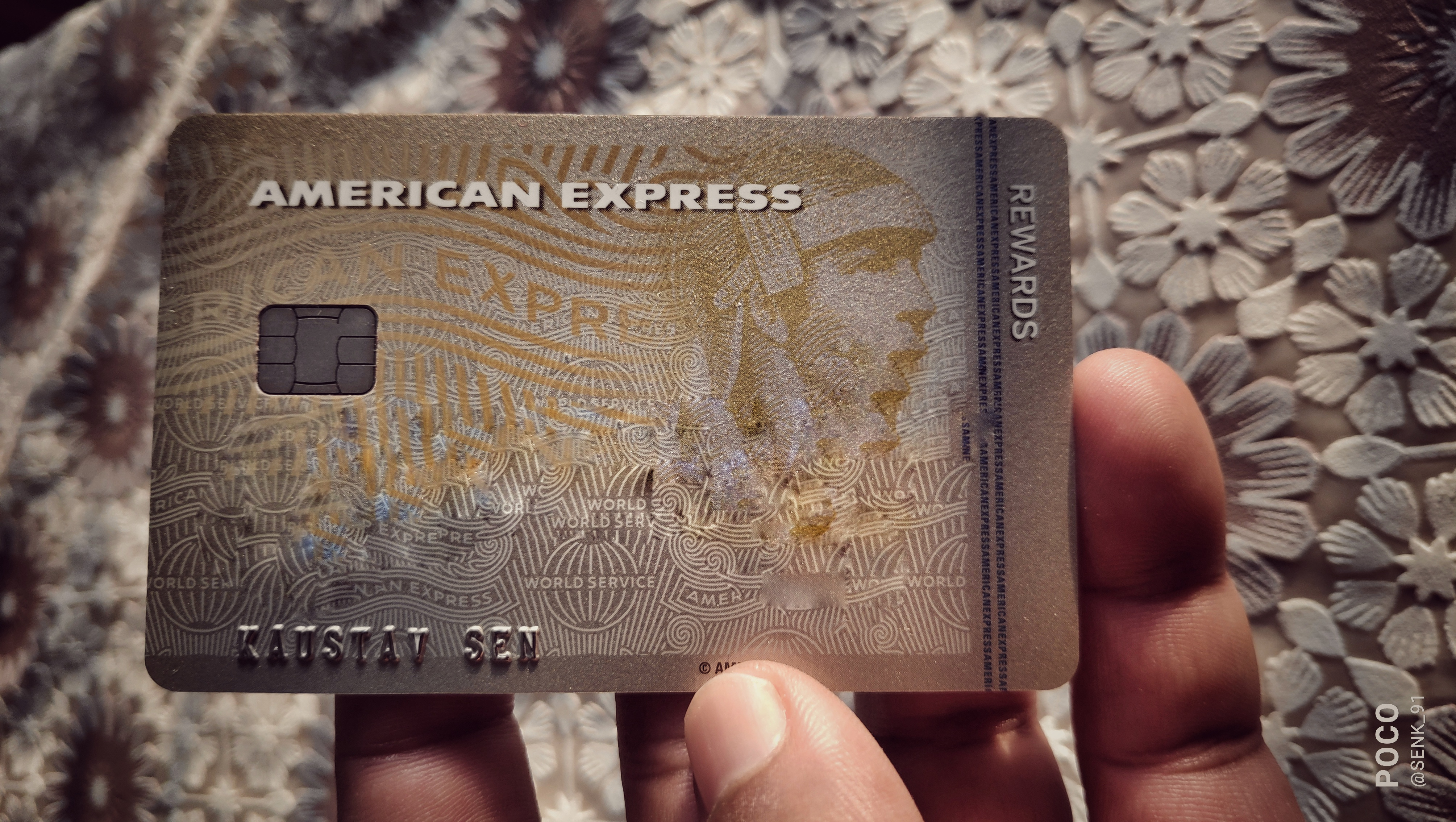
My AMEX card
Eligibility and Should You get one
The eligibility criteria for AMEX cards vary according to the cards themselves but are quite stringent as compared to the cards from other banks. An annual salary over ₹5,00,000 with a CIBIL score of 750+is generally recommended for being eligible for at least one card. We must remember always that being eligible does not mean that you must apply for it. You must have a clear idea of why you want the card? Is it for the benefits and rewards or just use it as a status symbol? Are you ready to pay the annual fee for it (You can get it for free too you know! Check the last point 😉)? Would you be able to utilize the card fruitfully? If you can justify yourself on these questions, then you should go ahead with it for sure.
My reasons to get the AMEX card were driven by the zest to try out the rewards being offered by AMEX. Since I had already been using my existing cards for most of my expenses and shifting to the new AMEX card was neither difficult nor have I had to go out of my way to spend differently.
The Rewards Programme
Let’s be honest, we choose credit cards based on the rewards they provide. Most have some sort of a cashback in place; be it as points, statement credits or miles. These rewards can be redeemed for physical things such as discount coupons, electronics, holidays, flight tickets and even cars. And this is what entices us ultimately, the value for return.
For AMEX cards, this value is high. They have multiple reward programmes running at a time which can be used quite interestingly often. As of now, besides the discounts being offered on the card in dining, shopping and such, they have spend based rewards at 18k and 24k points. Of course, you can redeem your points for statement credit monthly, but that is a sheer wastage of points.
Let’s take a quick example to see how using the AMEX card cleverly can be useful for us.
Assumptions:
The card is AMEX MRCC (Amex Membership Rewards Card)
The monthly expense is at least ₹20,000. This is not difficult if you include rent payment via credit card.
You have signed up for the spend based rewards programmes.
Scenario:
For the MRCC, you get 1 point for every ₹50 spent (some exclusions exist, such as utilities, fuel, etc.).
Spending ₹2,40,000 in a year provides you with 4800 points only. That is honestly very sad.
But, if you make at least 4 transactions of ₹1500+, you get another 1000 points. Assuming that is being done, the new total becomes 16800 points.
Signing up for a spend based reward programme, where if you spend more than ₹20,000 in a calendar month, you get another 1000 additional points. Assuming that is being done too, now, the final total becomes, 28800 points.
Now, with 28.8k points, you become eligible for both 18k and 24k rewards.
The 18k rewards has Taj vouchers, Amazon gift certificates, statement credits etc, while the 24k rewards has Tanishq vouchers too along with Taj vouchers and Amazon gift certificates. You can choose from these at your will. Apart from redeeming the points as rewards on AMEX, you can choose to convert some of them to air miles and redeem flight tickets too.
So, you see, if used cleverly, AMEX credit cards can be quite useful. It is not that these offers are available only for AMEX, but rather every card comes with its own sets of rewards. Some research helps.
Pros and Cons As I see it
The Pros and Cons of an AMEX card are as varied as the person using it. For me, the rewards were more enticing than standard cashback, while the main disappointment has been the non-inclusion of the MRCC in the airport lounge programme. I do not fret much about it though, since I have other cards which provide airport lounge access, but if the MRCC provided the same, it would have been nicer. Not having to pay annual charges offsets the disappointments greatly.
How to get an AMEX card for free
One thing we must understand is that the reason AMEX and other better-than-the-rest cards can offer the rewards is that they all have annual fees. In the case of AMEX, the MRCC and the SmartEarn are the two cards that have the option of fees waiver based on the spend.
SmartEarn is aimed towards the ones who want to have an AMEX card in their wallet mostly to feel premium about owning an AMEX card. It has the least entry requirements and does not have a lot of value in terms of rewards other than accelerated points accumulation.
This card has an annual fee of ₹495 + taxes which is waived off upon spending more than ₹40,000 in the previous billing year.
The MRCC on the other hand is aimed at people who want to enjoy the fruits of their expenditures but are not willing to spend a lot though. It misses out on lounge access, golf club memberships etc, but offers you possibilities to stay at Taj or gift yourself/ your beloved Tanishq items.
This card has a first-year fee of ₹1000 + taxes and an annual fee of ₹4500 + taxes. But, if you use a referral code, such as the one below, the first year fee becomes Nil and the annual fees come down to ₹1500 + taxes. In fact, if you use the card the way I have mentioned in the example and use my referral code, that’s how you can get your AMEX card for free.
Update:
Please note the exact charges would vary from card to card and kindly check for the latest MITC for the card on the AMEX website. As of February 2024, you will get the first year free, saving you ₹3500 and 2000 points bonus.
To end, I shall say that it is time that we begin using credit cards for our daily expenses. It promotes healthy financial discipline and improves your credit score. The credit score is an important tool to decide at what rate you shall get your loan from a bank. Mostly, higher credit score holders get better terms for their loans and the chances of rejection are minimized greatly.
Feel free to reach out to me with your doubts and questions, I shall be happy to help solve them 😊
In our school days, we learnt about the ancient civilizations of Mesopotamia, Egypt, the Indus Valley and China. Of these, it is generally accepted that one in Mesopotamia is the oldest, while the other three are contemporary to each other.
Focusing on the Indus Valley Civilization (IVC), the most prominent centres as mentioned in the textbooks are the Harappa, Mohenjo Daro and Lothal sites. Harappa and Mohenjo Daro were famous for having covered drainage systems and the great bath, while Lothal was the famous dock for trading ships.
For regular Indians, it is difficult to visit the Harappa and Mohenjo Daro sites, since they are in Pakistan, and right now, the countries are not on the best of terms.
The issue with Lothal docks is that one has to imagine a lot to understand how things might have been. The reason for this being the river that would have been the entry and exit to the port has shifted considerably, so now, Lothal is more of a landlocked location, with a dock. Also, the dock is almost the size of a big swimming pool.
The “dock” of the Lothal Docks
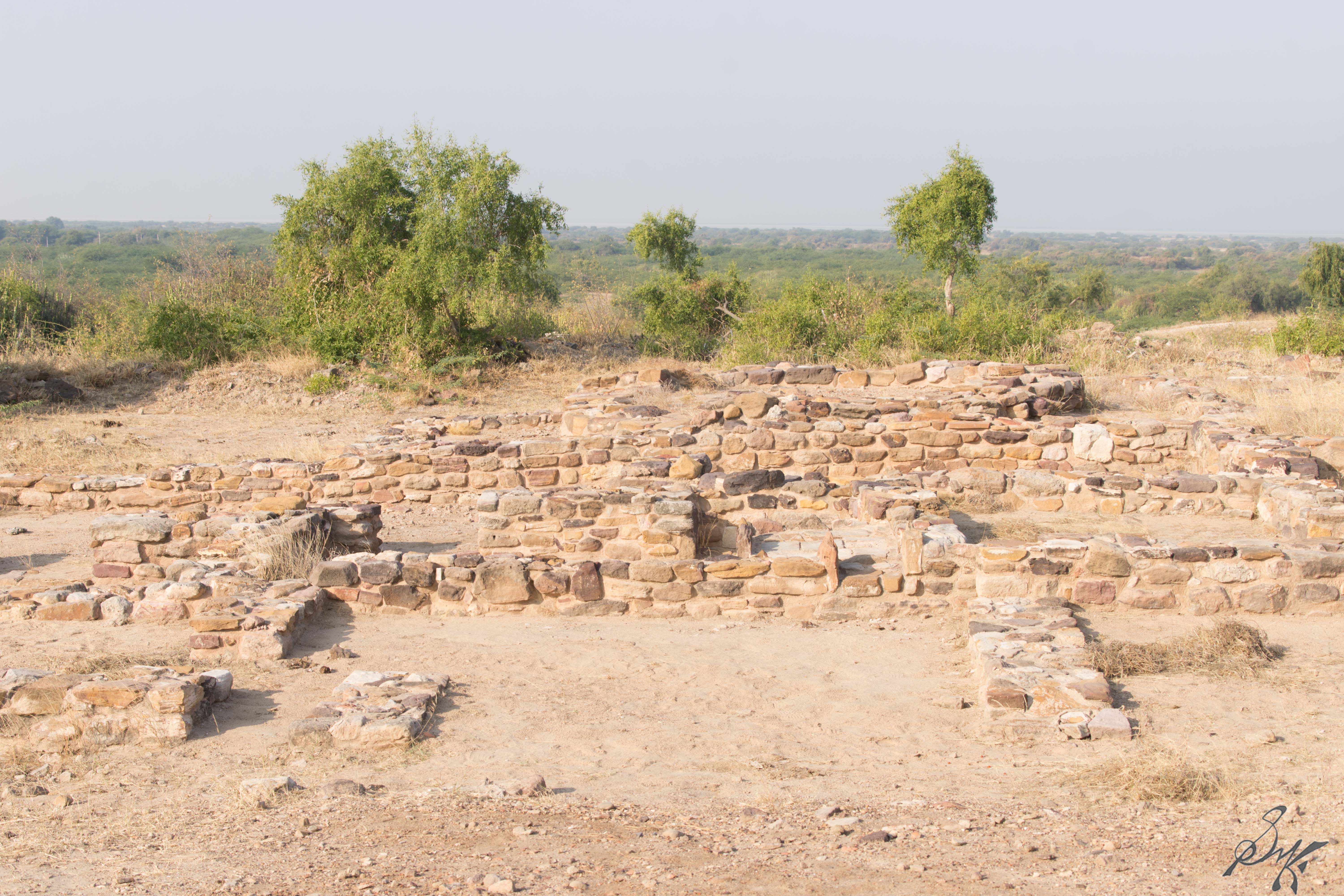
The excavations that have been found and unearthed near the docks, signifying the township, are in absolute ruins and it makes imagining structures and the life of the IVC residents a little difficult, at least, this was my personal belief.
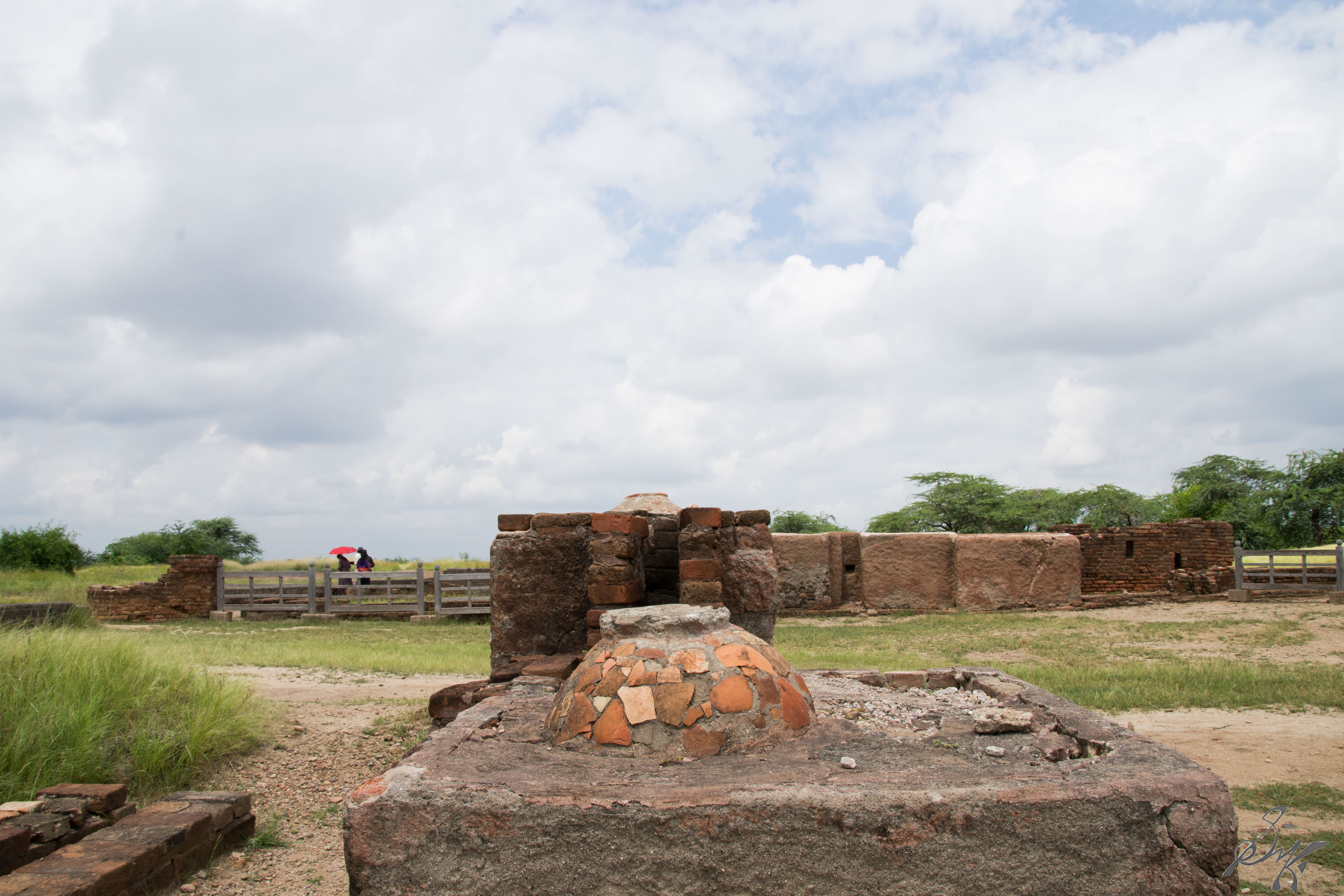
Ruins of the foundationRemains of pottery makingRemains of covered drainsThe foundation of Lothal township
Then, with a little research, I stumbled upon the site of Dholavira. On paper, Dholavira is not as famous as the other IVC cousins, had been found relatively recently and the place gets ignored since it is close to a much better advertised natural wonder of the White Rann of Kutch. On our trip to the Rann of Kutch, we chose to stay at Dholavira, instead of the Dhordo campsites and till date, that has been a major highlight of the trip for us.
What follows below is the account of my visit to Dholavira in December 2021.
The Dholavira excavation site is an ASI site and is still not the most crowded one. We arrived close to opening time at about 9 am and found parking quite easily. Having already visited Lothal a few months earlier, we did not have a lot of expectations of the place. But, since we had read that it is a big space, we hired a guide to help us understand better.
First glimpse of the Dholavira Metropolis mound
From the parking to the site as we walked, we crossed a small bridge over what appeared to be a dried river bed (river Manhar). Moving on, we got the first glimpses of the party piece of the Dholavira citadel. Just outside the city limits are multiple, deep reservoirs.
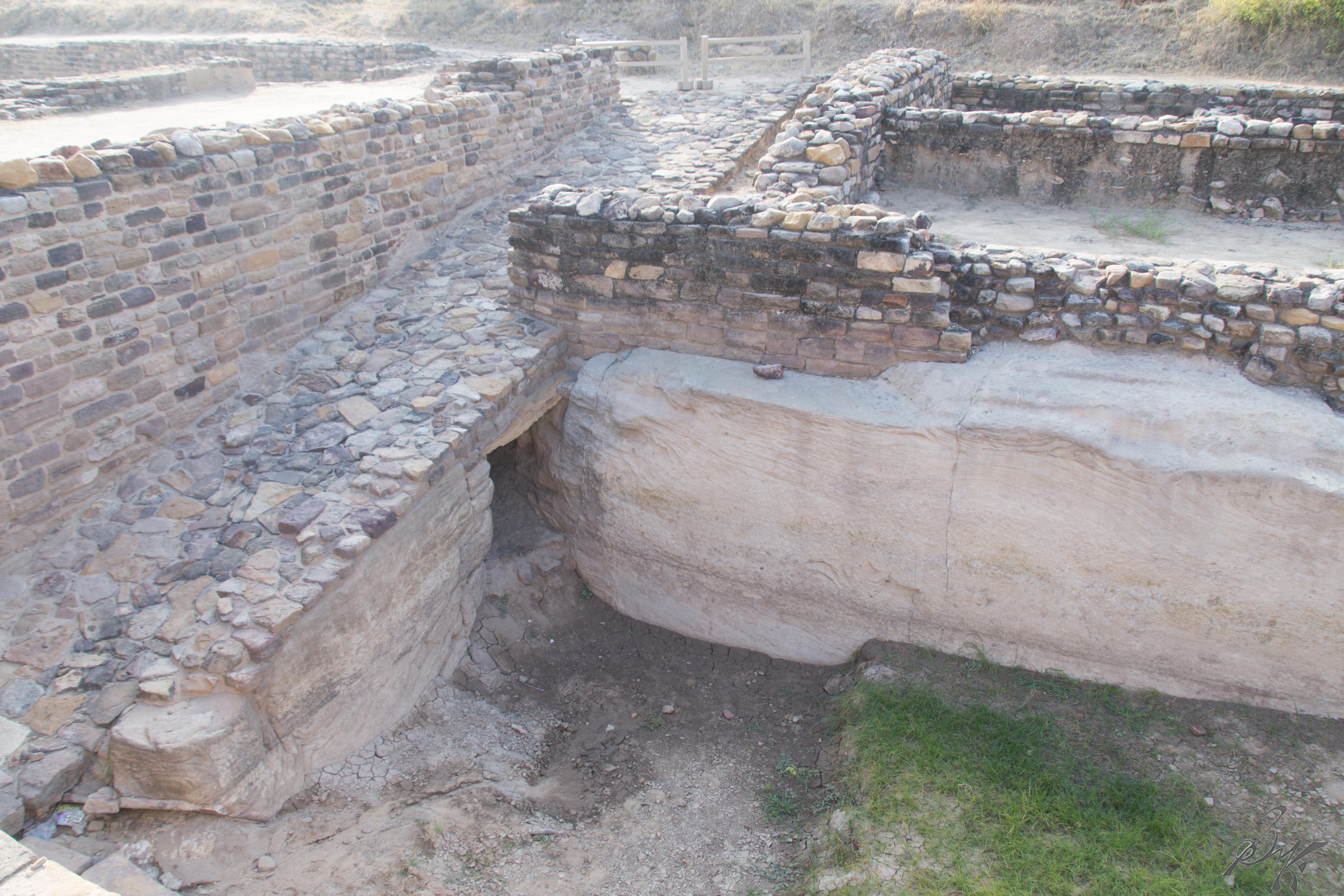
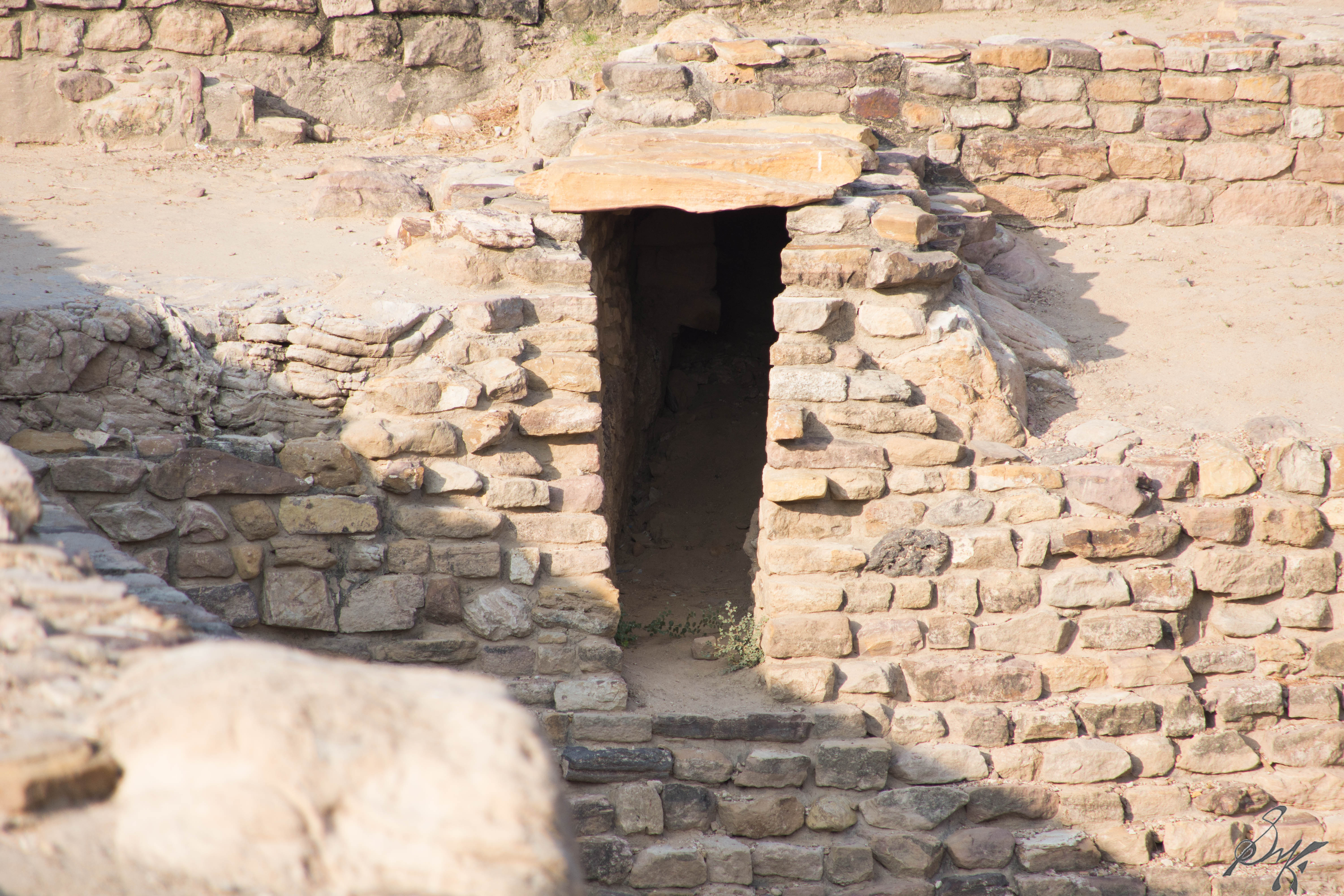
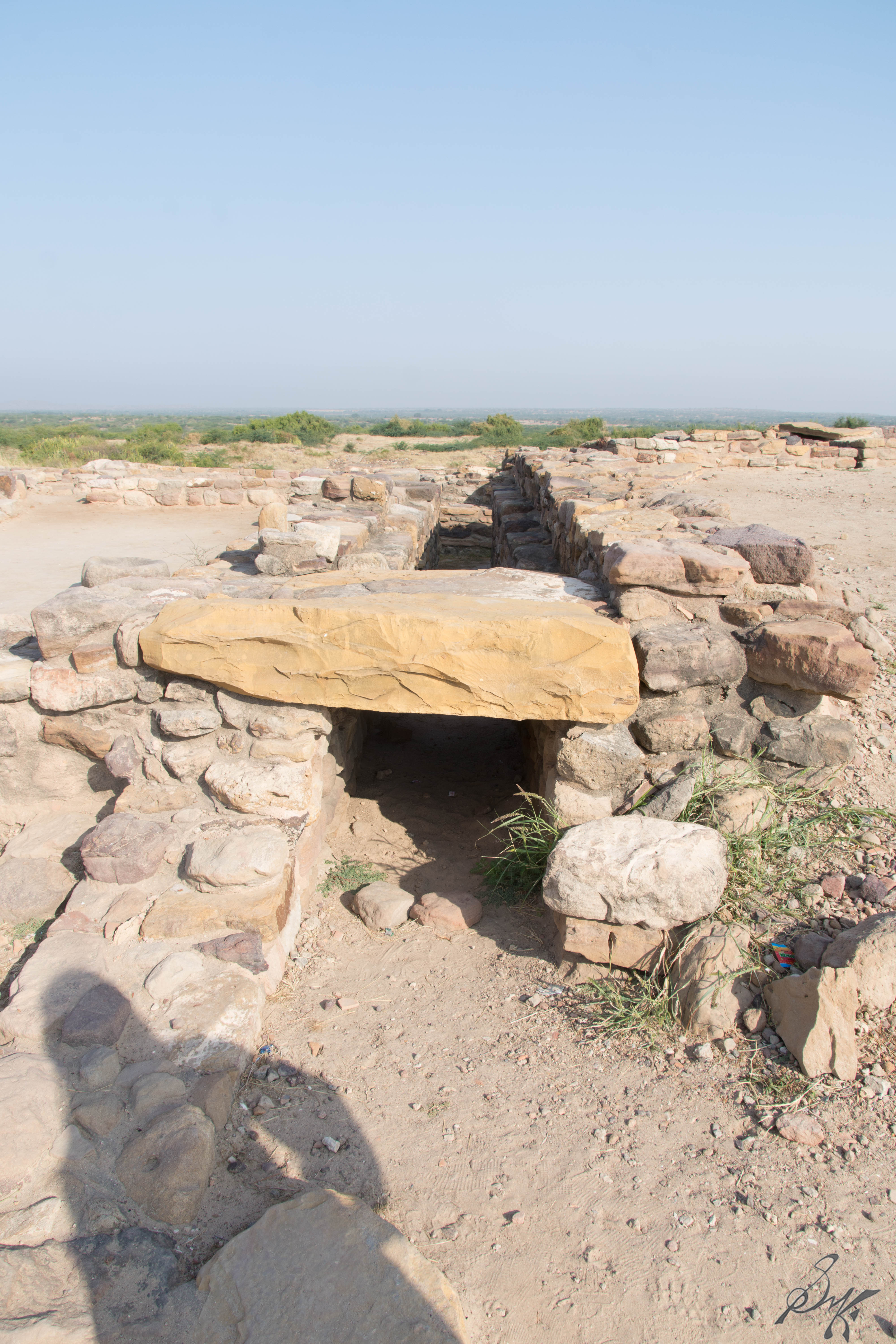
These reservoirs were basically water filtration plants. Water from the Manhar river (the dried one we crossed earlier) would be routed to the first tank via multiple check dams, which would serve as the primary holding tank for the water. This would allow the heavier impurities to settle and in the first step filtered water would be routed to the next tank, via covered drains. In the subsequent reservoirs, the lighter impurities which would be floating on the top surface would be eliminated by runoff due to constant water inflow. This would in principle allow the residents to obtain fairly clean water, devoid of major physical impurities. Another interesting thing to notice was that water inlets were at different heights connecting wells within the citadel, ensuring that the wells are full of water as long as the reservoirs have water in them. One of the biggest reservoirs, bigger than the great bath of Mohenjo Daro, has a proper rock cut slope on its side, clearly signifying that water drawing was done using wheeled carts.
Sloped accessway to the reservoirWater transfer portsWater transfer portLayered, rock cut and constructed reservoir for water management
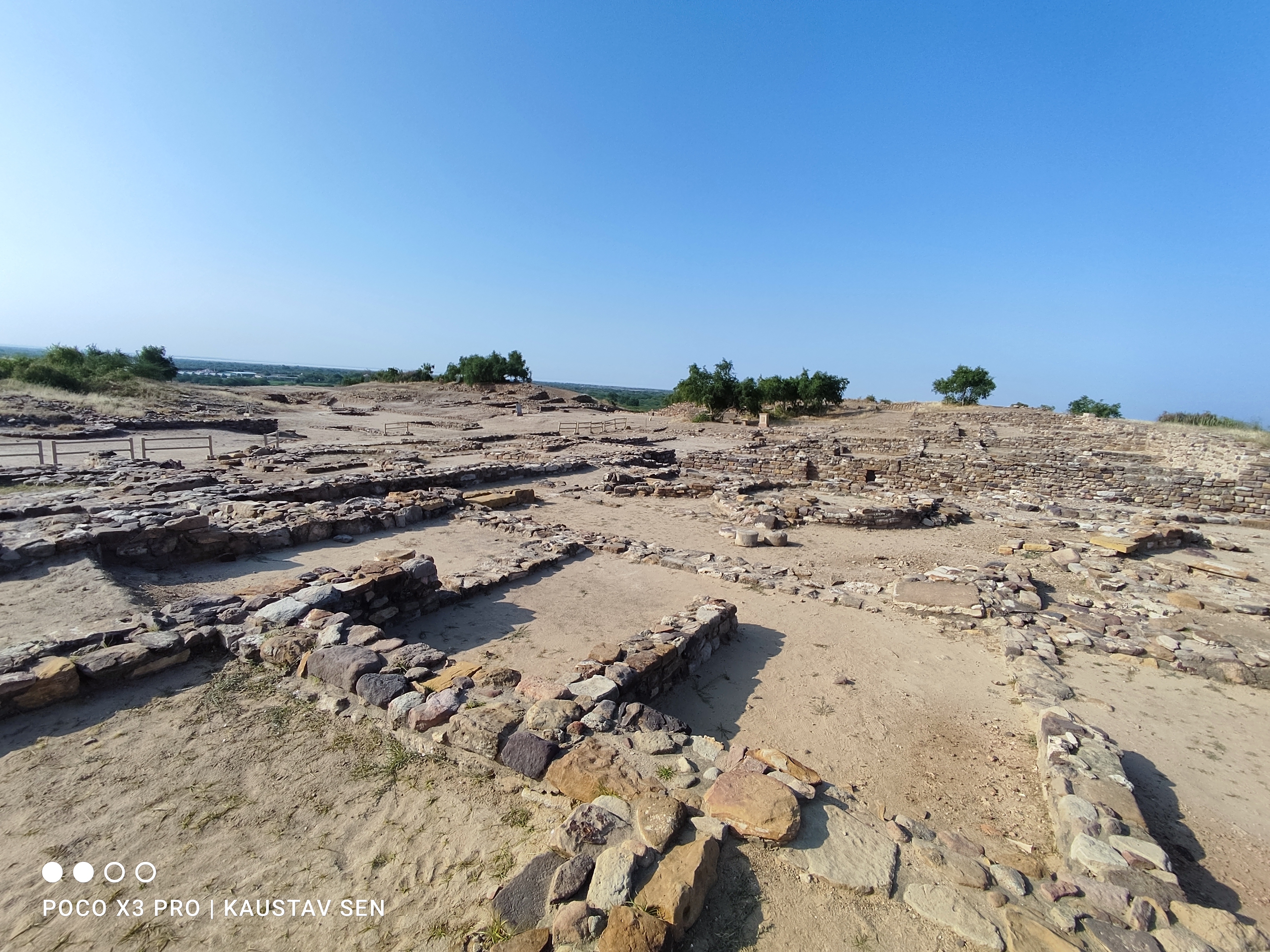
The citadel was divided into the upper town or castle, a bailey, a huge ceremonial ground separating the castle and the middle town, and beyond the middle town, the lower town. A little further away from the residential areas were the burial grounds.
The Dholavira layout and the 10-lettered introduction plaque for the metropolis as seen in the museum
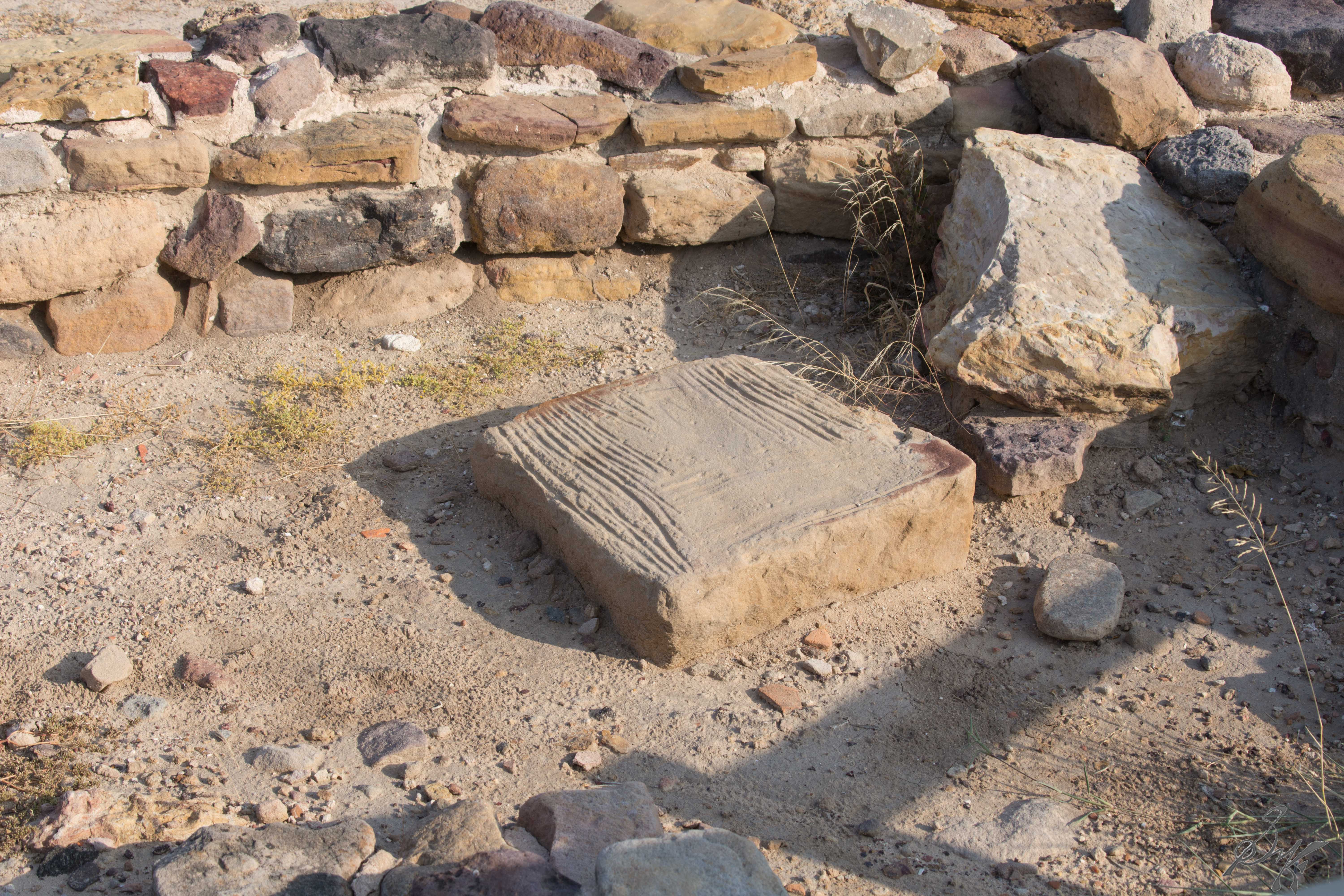
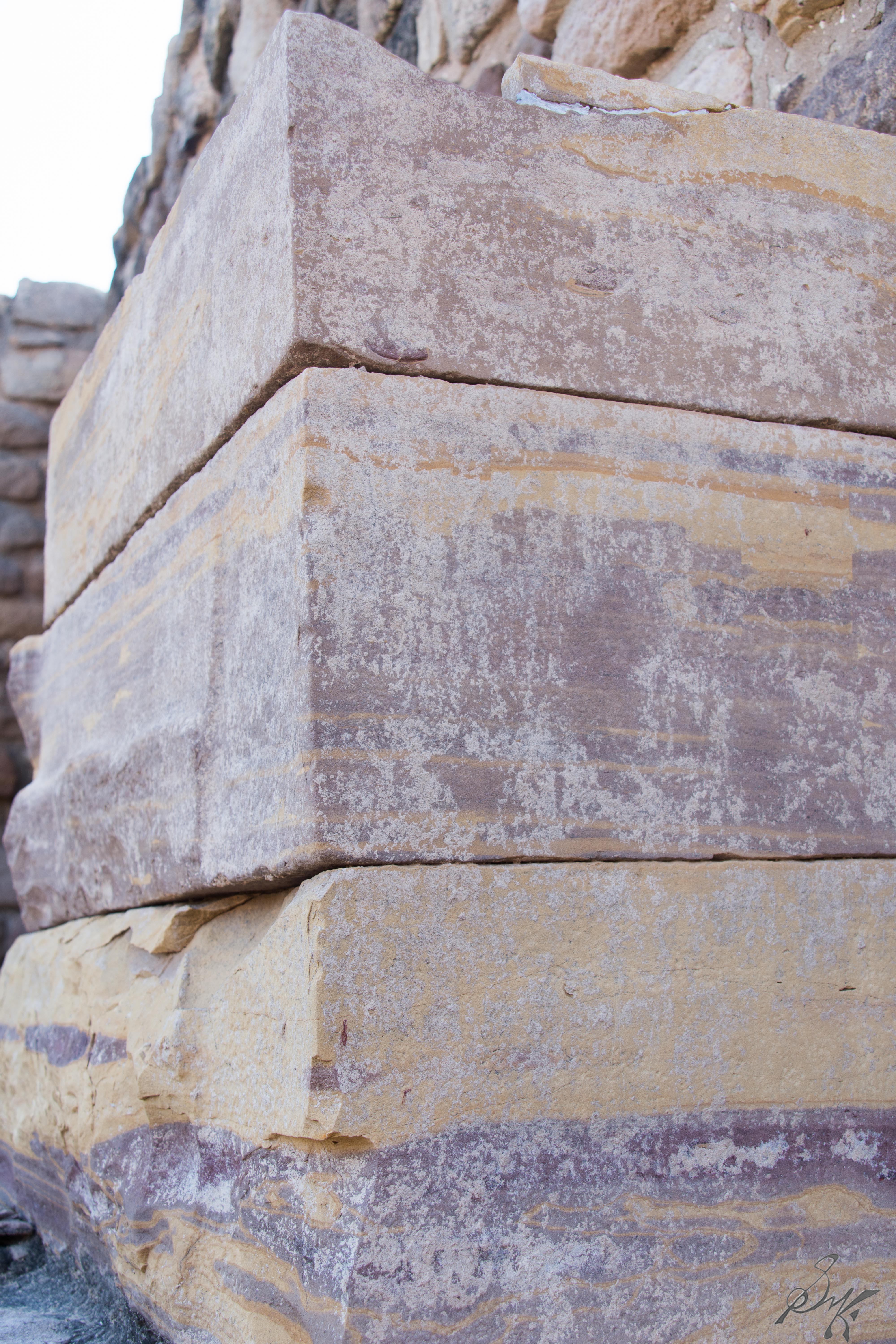
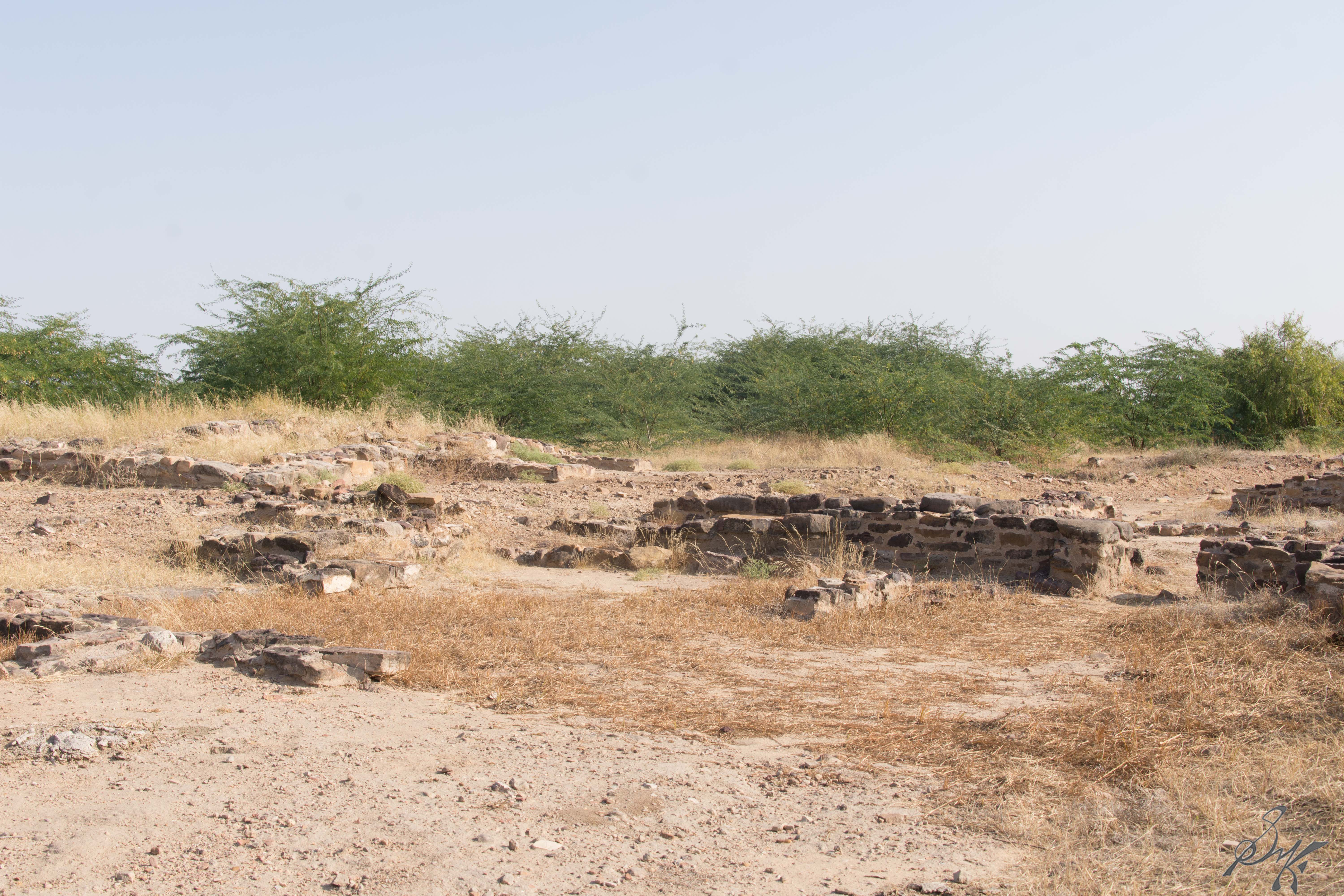
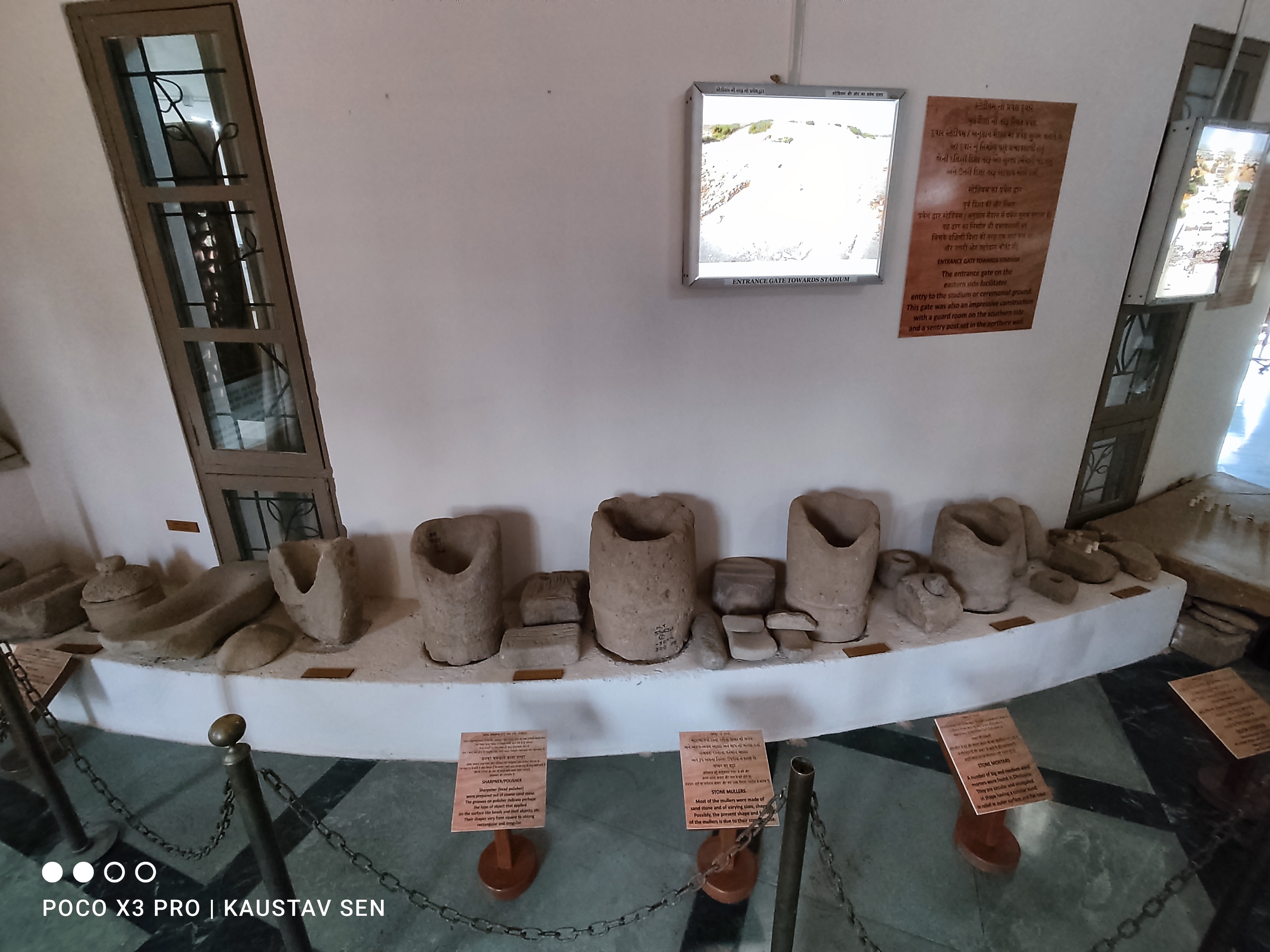
Within the castle area, one can see clearly the foundations of the different houses and their rooms. One can see the rocks on which raw stone would be polished by repeatedly brushing them in linear motions. Remains of seating arrangements can be still seen. Interestingly, the guide mentioned that the beads and other rock ornaments which were manufactured in Dholavira had been found in Egypt while seals from Egypt had been recovered from Dholavira. While I do not remember seeing the Egyptian seals in the museum there, it is extremely believable that a flourishing trade existed between the contemporary civilizations.
Beads factoryPolishing stone with marks of useWater movement ports in wellsMortar and pestle One of the gates to the castleCovered drains within the townHouse with Seating arrangement
Moving on, between the upper town and the middle town is the ceremonial ground, about 250 metres long and 30 metres wide. This served as the main gathering space for the residents of the three towns for games, festivals or other general business. And there appeared to be rock-cut galleries as well, which could have very much served as seating space for spectators.
One of the exits leading towards the middle and lower town, ceremonial ground in between
By this time, what we had planned to be an hour-long trip through the ruins, had turned into a 3-hour-long journey through time. The best part, we could relate to what was being told to us much easier since we could see most of the structures. Yes, we did have to imagine a bit, but then, we could see the foundations, the walls, the water inlets and the outlets to the reservoirs very clearly. What makes it more intriguing is the fact that this civilization existed from 3000 BCE till about 1500 BCE, i.e almost 5000 years from the present; and they had properly segmented township and water management systems already in place.
More evidence of superb architectural prowess
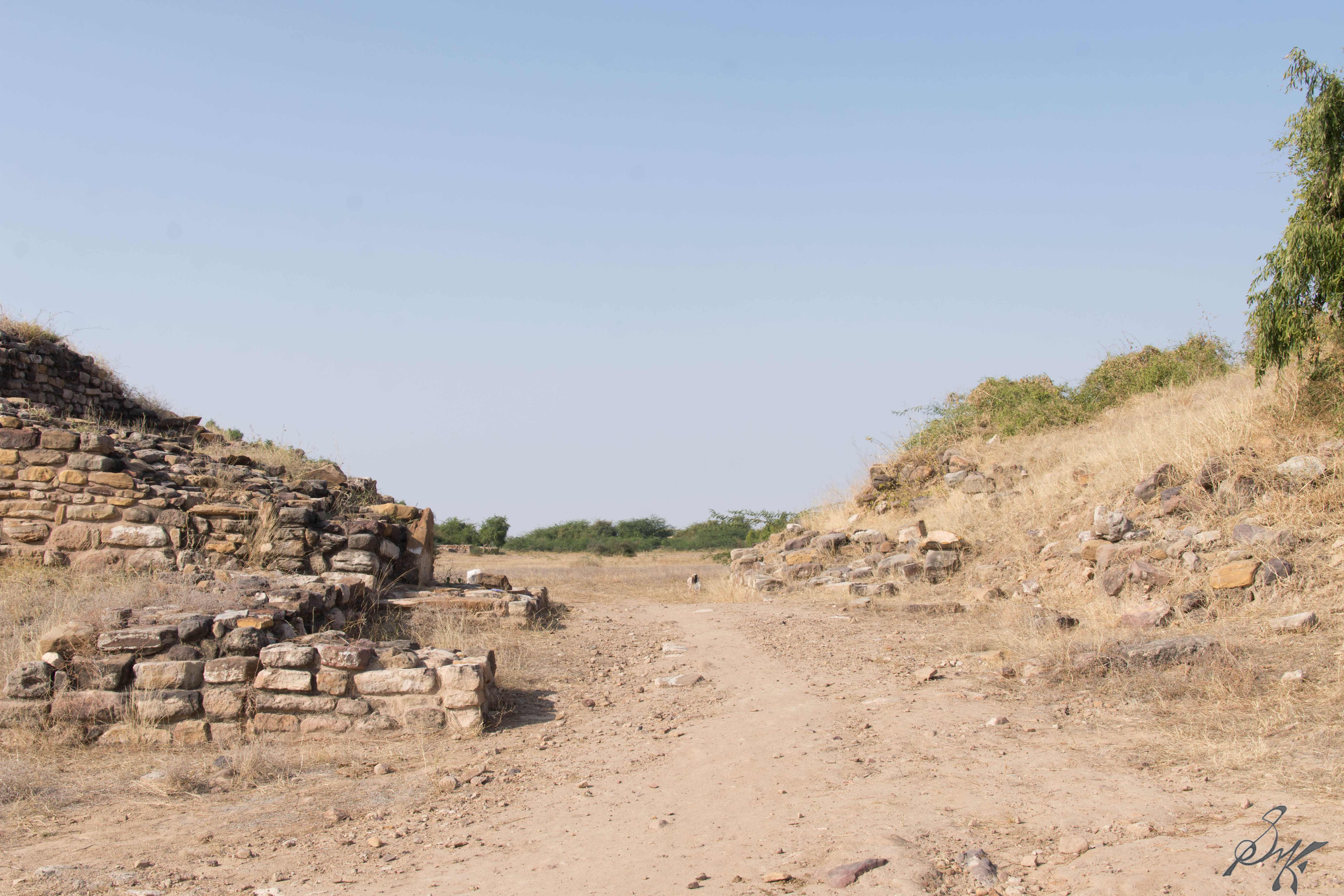
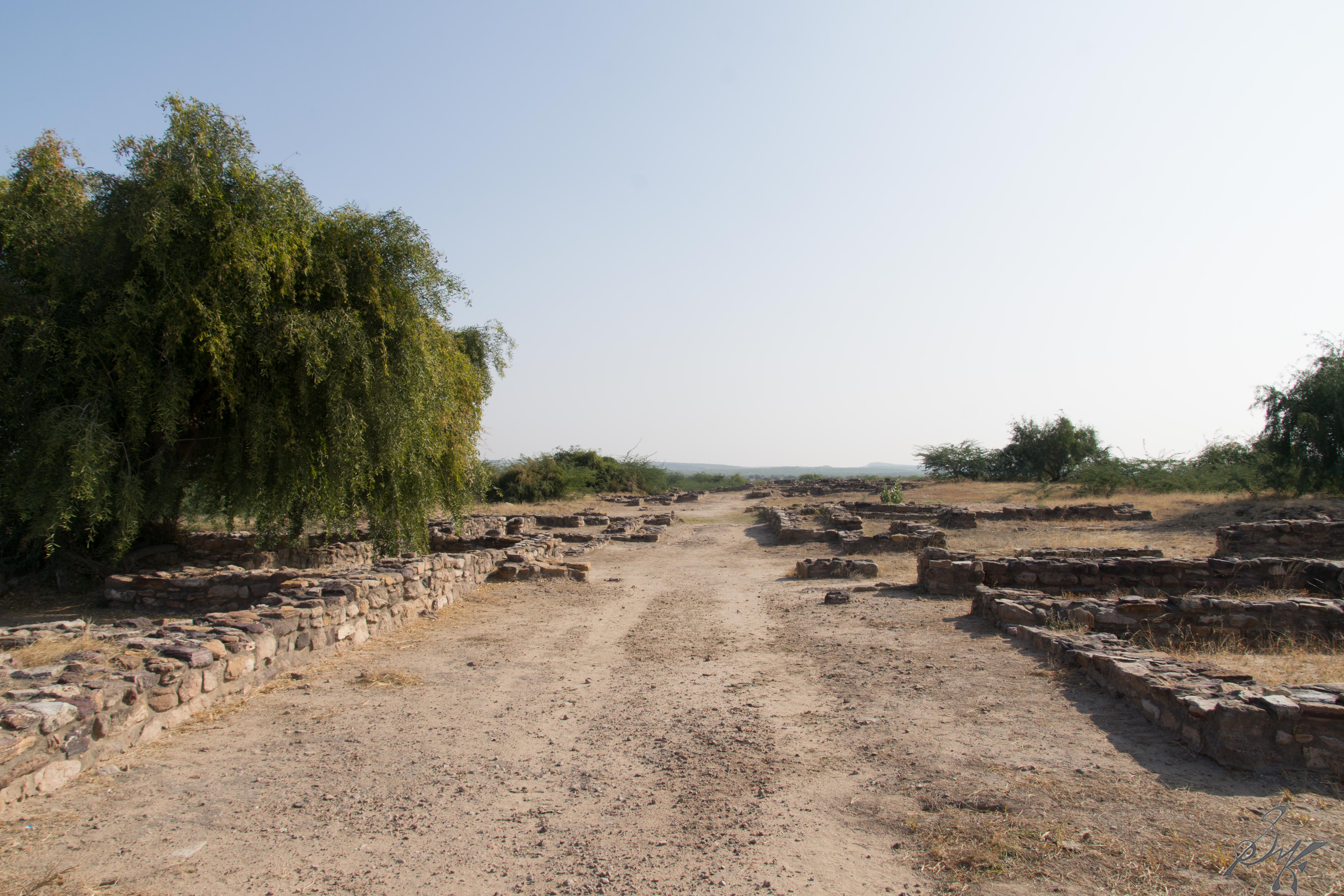
After revelling in the past for a while, we checked out the middle town. This part of the metropolis had one central road. Smaller roads branch out on either side and on each of these branches were ruins of the houses that had existed in the past. This area has not been completely excavated yet and it is expected that more of the same shall be found in the locality.
Slots in stone for possible door closure mechanismImages from the middle town
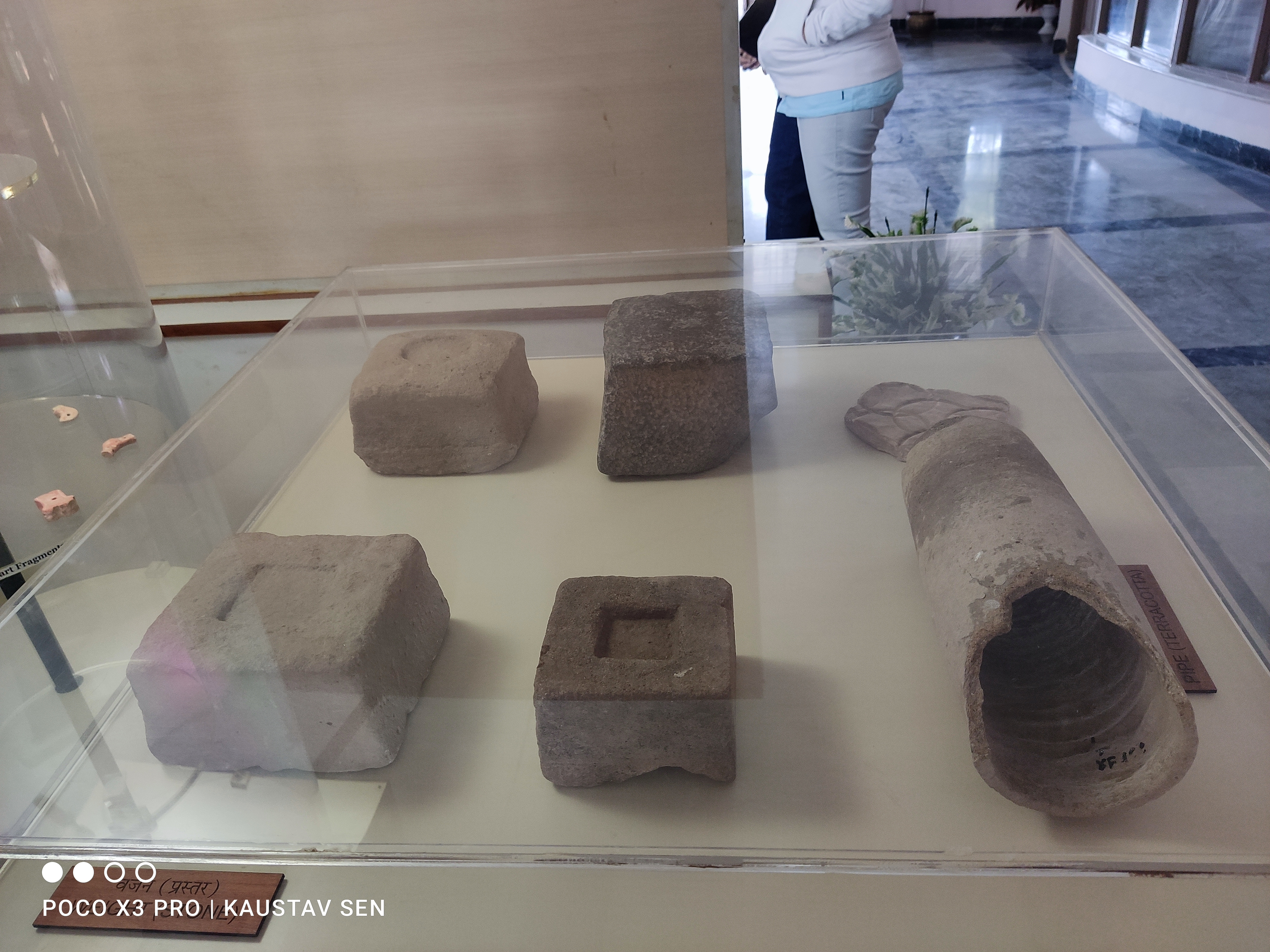
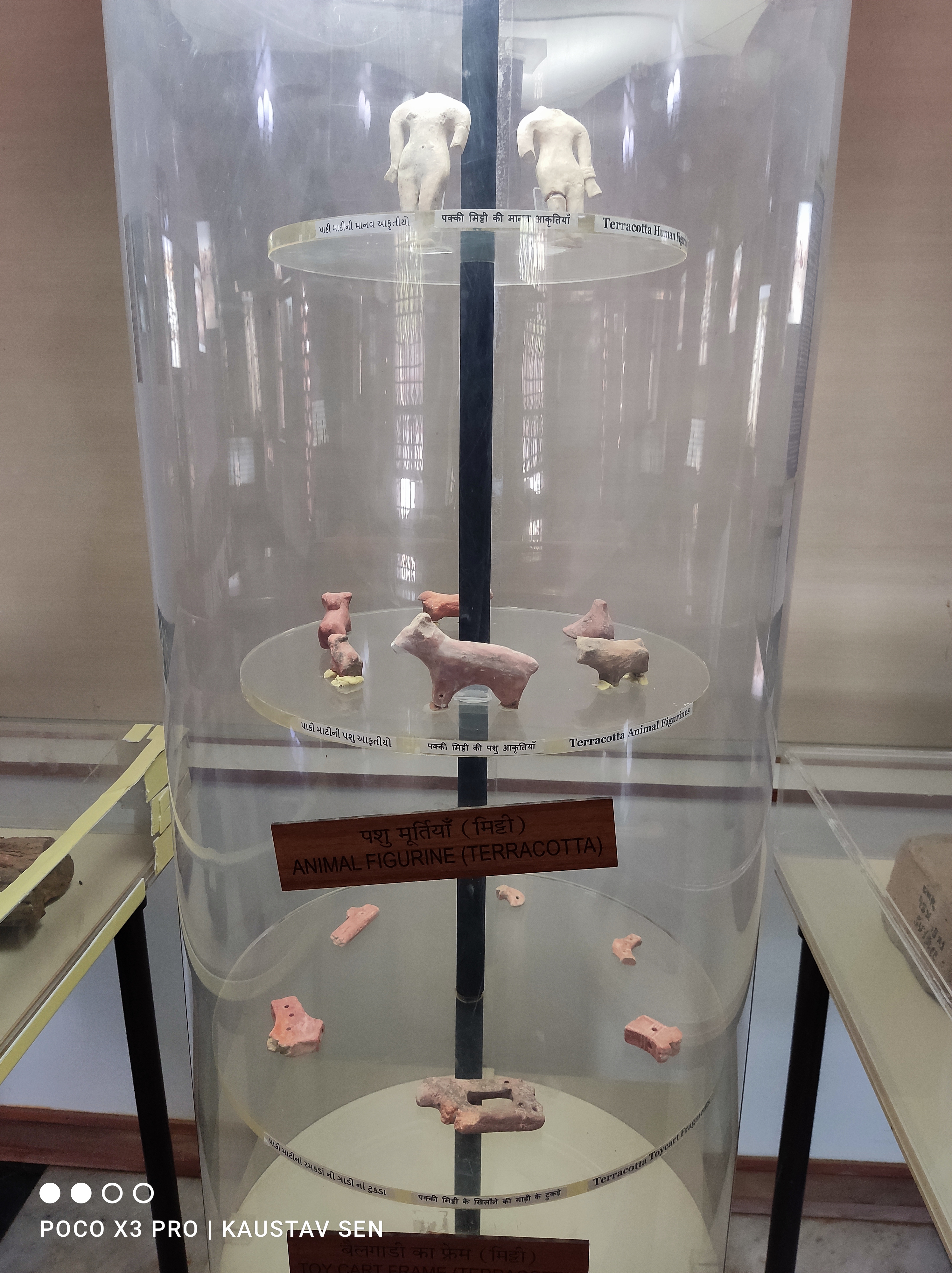
Since we were getting quite late by now, we hurried back for a visit to the museum. The museum houses some of the interesting finds that had been recovered from the site, such as storage jars, standardized weights, stone mortars, polishing stones, terracotta figurines, etc.
Artefacts recovered from the site, kept in the museum
We left Dholavira, happy to have visited this amazing historic place. But there was a shred of disappointment that this place is not advertised enough. While Dholavira often features in the day tours from the Rann of Kutch, there is not enough curiosity amongst us to visit these ancient cradles of civilization. We often choose to visit the Machu Pichu in Peru or the Pyramids of Giza while referring to ancient civilizations, while ignoring the fact that right here, in our own country, we have a very rich heritage, which a lot of us do not know of. So, dear reader, next time you are curious about history, ancient history, beyond religion or cultural division, do pay the Dholavira metropolis of IVC a visit, I feel, you will not be disappointed.
The RBL Zomato Edition card has been discontinued by the bank and has been replaced by a RBL Shoprite credit card. The Zomato Pro and Zomato Pro+ schemes have also been ended by Zomato and the older Zomato Gold has returned. For the ones who would order regularly from Zomato, this card was a nice one and it shall be missed.
No, it is not just a clickbait headline.
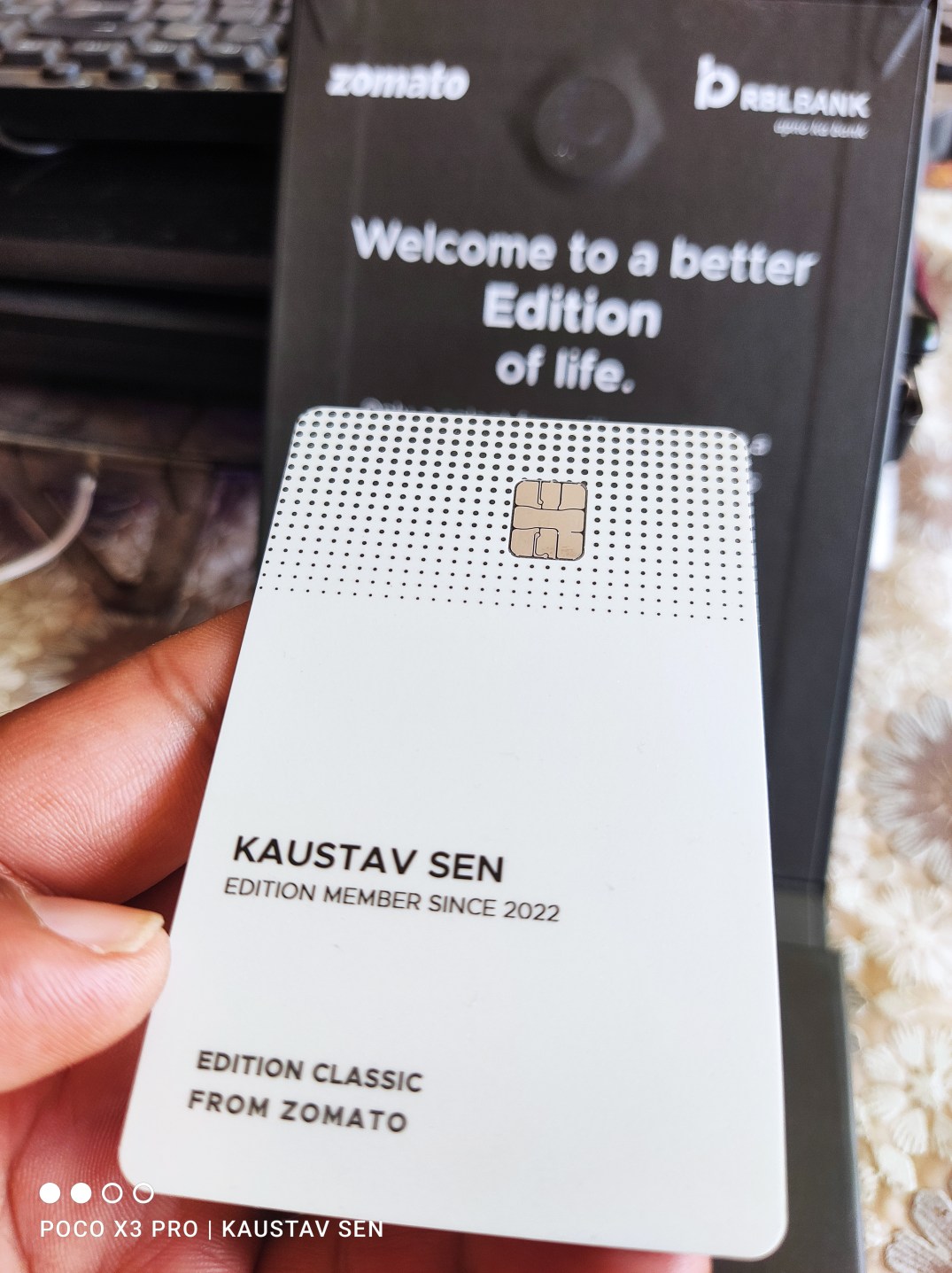
Zomato, the leading food aggregator service platform has come up with a unique proposition, in collaboration with RBL Bank in India, targetting their best-known customers, The Foodies! They have a credit card, Zomato Edition and for as long as you own the card, Zomato Pro shall be free to your account. The card has no joining or annual fees and offers quite interesting cashback, redeemable on Zomato. The proposition seemed nice, so naturally, I applied for it.
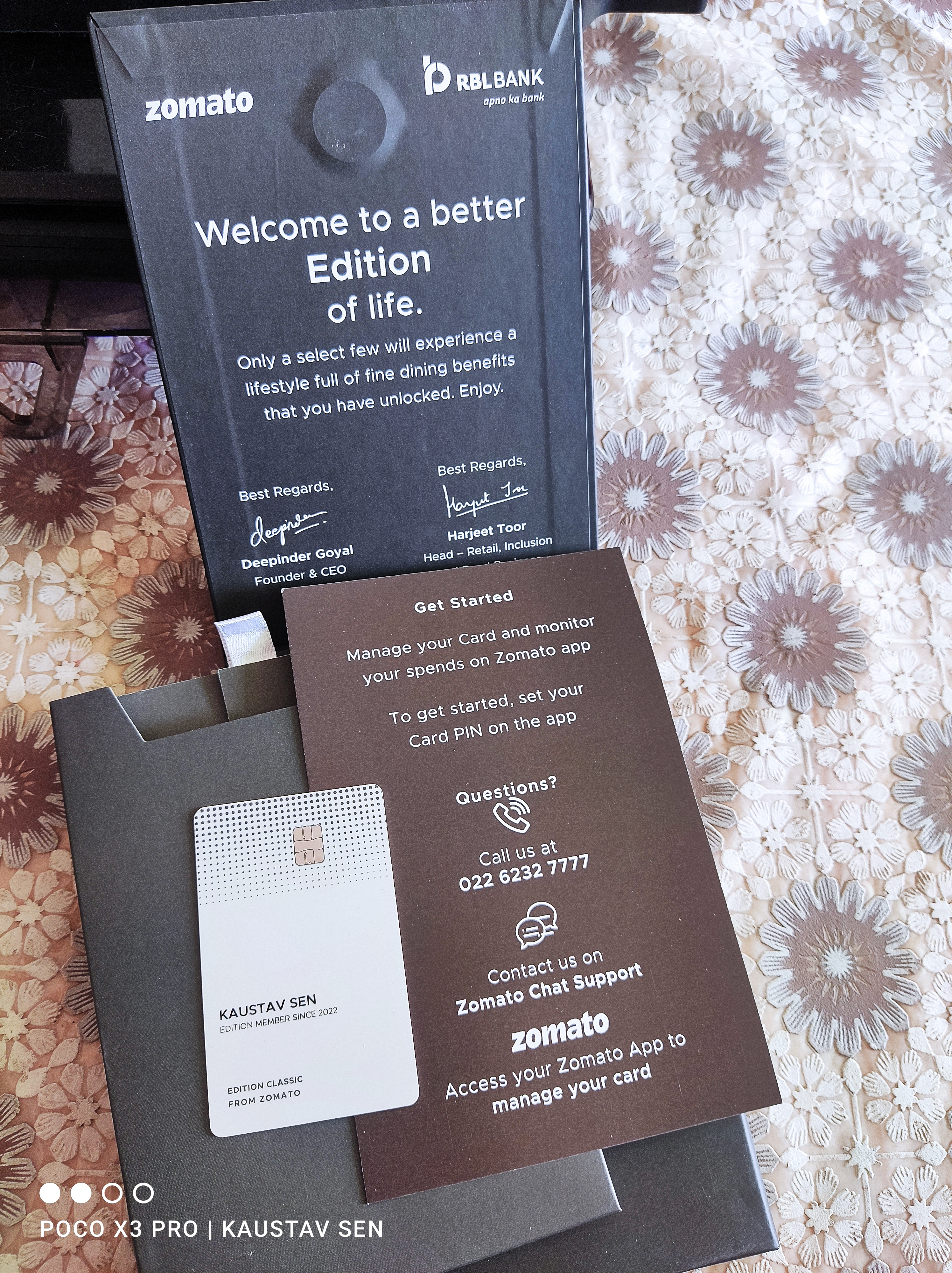
The application process is simple. You log in to the Zomato app, head over to the tab that says, Money. There, you’ll find the option for a Zomato wallet and Editon. Selecting Edition will take you to a signing up page, where you provide consent of application, addresses, etc and then upload the documents. The KYC with RBL bank happens over video call and is smooth. And then, in about 2/3 business days, you have the card with you.
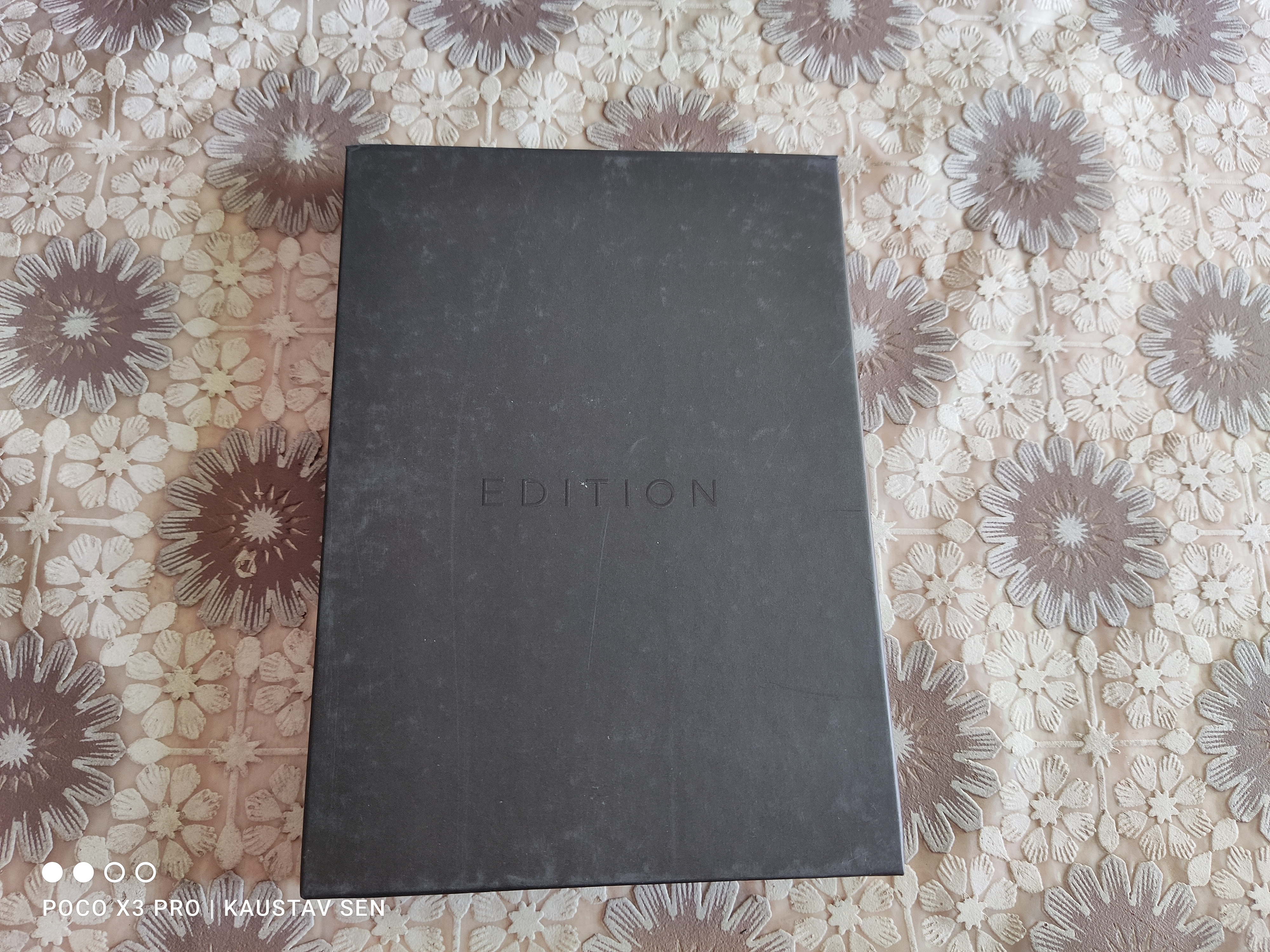
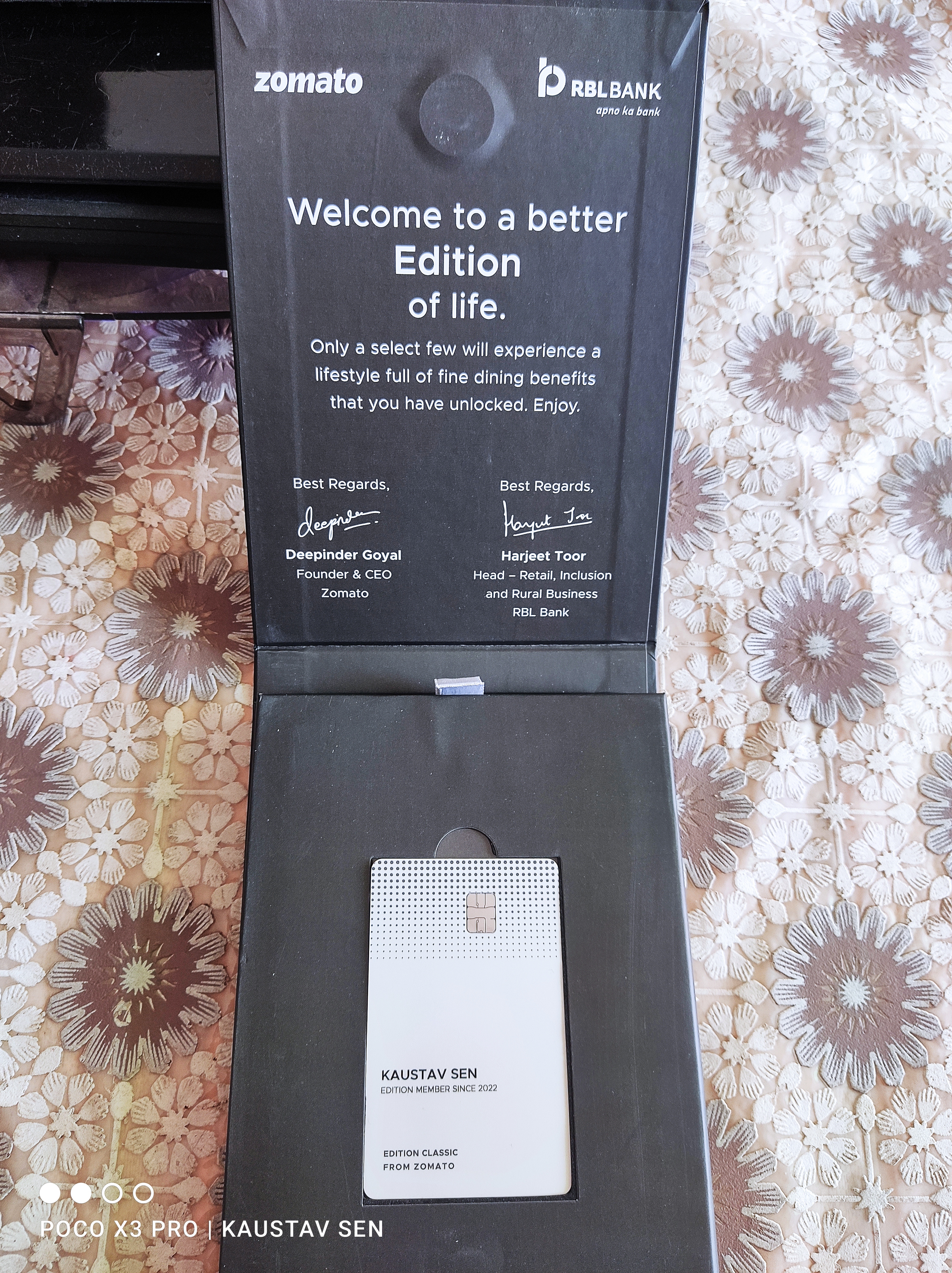
Zomato Edition box and its contents
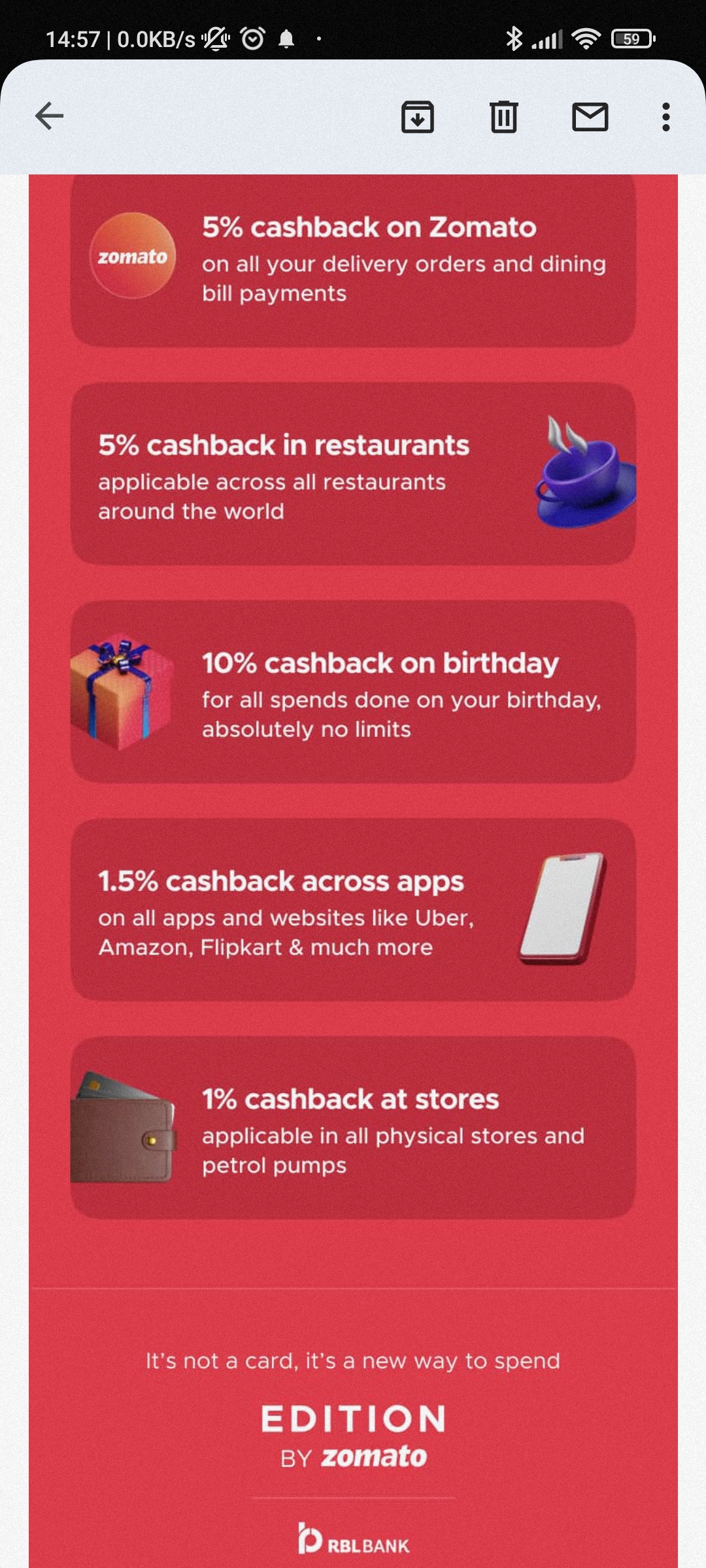
The offers that were provided to me can be seen on the below screenshot of the email.
Benefits of the Zomato Edition Card
Basically, we have a card, which is lifetime free. No annual charges. VISA Card, so accepted globally. Has a decent credit limit. And offers cashback in the form of Zomato credits. You can choose how much of the cashback do you want to use as Zomato credit at a particular time. And, Zomato Pro for as long as you hold the card. An absolute win-win situation for anyone who uses Zomato to order food.
I honestly do not see any downsides to this card, that should deter anyone who uses Zomato, from ordering this card. Tell me your thoughts on this in the comments below!










































 TRAVELOGUES AND TREASURES